

Album: El Tiempo Latine
Artist: Ensemble for These Times
Record Label: Aerocade Music
Catalog No.: AM022
GITN: 4068992684611
Release date: May 8, 2026
Format: Digital and CD
Digital booklet: download here
Buy/stream:
Bandcamp | Apple Music | Tidal | Amazon Music | YouTube Music | Spotify
SELECTED REVIEWS
“a terrific addition to its discography and a release that flatters those who contributed to it.”
“a stimulating selection of works spread across two discs.”
CREDITS
Ensemble for These Times
Megan Chartier, cello (Tracks 1-4, 8, 11-14, 16)
Lylia Guion, violin (Tracks 1-3, 8, 16)
Margaret Halbig, piano (Tracks 1-10, 12-23)
Chelsea Hollow, soprano (Tracks 15, 17-23)
Nanette McGuinness, soprano (Tracks 5-6)
Produced by David Garner and Nanette McGuinness
Co-Produced by Margaret Halbig
Engineered by Lilly Conley (recording engineer)
and Cory Todd (mixing/mastering engineer)
Cover art: Taylor Chan
Additional graphic design: Meerenai Shim
El Tiempo Latine by Ensemble for These Times
Ensemble for These Times has championed marginalized, exiled, and/or forgotten creative voices in our programming and recordings from our beginnings in 2007 — and El Tiempo Latine is no exception. Inspired by the music we encountered while working on our fourth album, The Guernica Project (Centaur 3946), and also by conversations with a dear friend, Cuban-American GRAMMY Award®-winning producer and musician Kenya Autie, we wanted in this new album to focus more directly on music by some of the fabulous contemporary classical Latine composers in our repertory.
For El Tiempo Latine, we have chosen favorites by nine composers, ranging from major prize winners — Mexican Gabriela Ortiz and Argentinians Claudia Montero and José Bragato (GRAMMY®), Cuban-American Tania León (Pulitzer), and Californians Gabriela Lena Frank (Heinz) and Carla Lucero (Opera America) — to rising stars — Puerto-Rican Angélica Negrón and Andean-American inti figgis-vizueta — and emerging San Francisco talent, half-Peruvian Brennan Stokes.
TRACK LIST
1-3. Buenos Aires en tres by Claudia Montero
I. Allegro
II. Intenso y pesante
III. Decidido
4. Milontan by José Bragato
5-6. Dos canciones argentinas by José Bragato/Salomón Carovich
I. Magia Azul
II. Milagroso amor
7. Su-muy-key by Gabriela Ortiz
8. Elegia a Paul Robeson by Tania León
9. Tumbao by Tania León
10. Sueño Recurrente No. 1: Veo carros fantasmas by Angélica Negrón
11. the motion between three worlds by inti figgis-vizueta
12-14. Manhattan Serenades by Gabriela Lena Frank
I. Uptown
II. Midtown
III. Downtown
15. Sin vos (from Juana) by Carla Lucero/Alicia Gaspar de Alba
16. La revelación (from Juana) by Carla Lucero
17-23. The Unseen by Brennan Stokes/Sara Teasdale
I. Open Windows
II. Lost Things
III. Pain
IV. The Unseen
V. Gray Fog
VI. There Will Come Soft Rains (Wartime)
VII. If Death Is Kind
ABOUT THE ALBUM
We first encountered Claudia Montero’s music when she was kind enough to voice one of the haikus on our recording of La colección de haikus by Spanish composer Mercedes Zavala (thanks again to the wonderful Kenya Autie for connecting us and also voicing another of the haikus) and we immediately fell in love with Claudia’s Buenos Aires en tres (2016), programming it for a concert of music by women composers in January 2021, during the COVID pandemic. Sadly, Claudia passed away shortly before the concert and never had the chance to hear us perform the piece, one of her many wonderful homages to that city. Indeed, Argentina and Buenos Aires have played an important part in Claudia Montero's works and her second album, Irremediablemente Buenos Aires ("Inevitably Buenos Aires") featured three instrumental works inspired by the city, including the trio on this album.
José Bragato’s “Milontan” (published 2001) exists in several different arrangements, including piano trio and piano quintet; it is probably best known and most-often performed today as a duo for cello and piano. The texts for his charming Dos canciones argentinas (two Argentinian songs, published 1999) were written by Salomon Carovich, about whom little information is available.
Gabriela Ortiz writes about “Su-mu-key” (2004):
The ways of listening to music, new collaborative possibilities, the infinite arsenal of compositional tools available and the direct contact with the media has driven us towards an eclectic universe of sound languages which define today’s world. For myself, I aim to refine day by day those techniques which facilitate my imperative need to communicate through music. I grew up surrounded by Latin-American music and love dancing salsa, which is something that comes naturally to me. Writing this piece, I tried to let this joy filter through in my writing so that it would be a personal portrayal of me and not just a literal approach to salsa. But I trained as a classical pianist and also love Ravel, Bartók, and Stravinsky.
Tania León has said in interviews that her grandmother made frequent mention of artists Marian Anderson, Josephine Baker, and Paul Robeson. Clearly, León's grandmother's words had an influence on her, for all three artists have appeared in León's career in different ways: Anderson narrated one of the composer's works ("Spiritual Suite"); she worked with Baker shortly before Baker's death; and the composer paid tribute to Robeson in her habañera-styled elegy to him, “Elegia a Paul Robeson” (1987).
Of “Tumbao” (2005), León writes:
Like everything in life, we are all reinventing ourselves constantly. Cultures have emerged from the influences of people travelling around the planet. The same could be said for the evolution of music. In a hundred years from now, we might have a hybrid developed from the pollination that is going on in the world of music at this moment. I draw my inspiration from my ancestors and all of those I have been able to learn about or learn from in all walks of life. My early influences were Bach and Cervantes. The piano was the first instrument I touched as a baby… I began my music studies, on the piano, at four. In Tumbao, I enjoyed being able to release some of my most vital roots into my composing mix.*
“Sueño recurrente #1: veo carros fantamas” (“Recurring dreams: I see ghost cars,” 2002) by Angélica Negrón is a seemingly simple but melancholy and moving piece for solo piano. In an interview, the composer said:
It's a piece that I wrote a long time ago—if it's not my first, my second piece that I ever wrote. It's very influenced by Satie…he was one of those composers that really inspired me [with] this unapologetic simplicity while at the same time having a sense of irreverence while also being incredibly meaningful. It was also inspired by recurring dreams I was having at that time, about cars that were flying, and I would think of them as ghost cars. I really don't know what that means, but [it's] this thing that keeps coming back in your dreams, and you try to make some sense of it but maybe that's not what it wants; it just exists, and it's an image that stays with you.
In the words of inti figgis-vizueta, “the motion between three worlds” (2020):
...draws inspiration from the transitional aspects of Spring, centering poetics of new growth, creation, and interconnectivity. The score behaves as a cosmological map, providing visual frameworks for navigation and movement between sets of given harmonic and timbral materials. The directionality of visual objects, lines of connectivity, and cosmological imagery help inform trajectories of transformation. The player is asked to “always be moving between.
Of her “Manhattan Serenades” (1995), Gabriela Lena Frank writes:
Lighthearted in nature…[the piece] demands a high level of agility from both pianist and cellist.Elements of jazz define the work, including improvisation and triplet swing tempos that are not exactly notated. For many a classically trained musician, this is a scary task!— but it is my hope that Serenades provides an entertaining and worthwhile forum in which to explore such unknowns…
“Sin vos” and “La revelación” (arranged by the composer for voice/piano and piano trio, respectively) come from Carla Lucero's Spanish-language chamber opera Juana (2019), which is based on the award-winning book, Sor Juana’s Second Dream, about the great 17th century Mexican poet, nun and feminist icon Sor Juana lnés de la Cruz. Writes Lucero:
Recognized as “The First Great Poet of the Americas” by scholars and feminists throughout Latin America, Sor Juana Inés de la Cruz faced the Spanish Inquisition in Mexico (then New Spain) because of her controversial writings, most of which challenged the religious patriarchy of the time. Some have been interpreted as romantic poetry dedicated to la Condesa de Paredes, the Vicereine of New Spain, who was Sor Juana’s close friend and confidant. Throughout her poetry and letters, Sor Juana wrote about a nonbinary existence, considering herself neither female, nor male. While it’s not certain that their relationship was ever consummated in reality, in Juana, based on Alicia Gaspar de Alba’s sweeping historical novel, Sor Juana’s Second Dream, it is. This leads to Sor Juana’s demise in the opera.
In the aria, “Sin vos” (“Without You”), la Condesa is distraught because she has just learned that she and her husband, the Viceroy, will be returning to Spain, ending their regal reign. Her husband doesn’t realize her anguish is over leaving Juana, with whom she is having a clandestine love affair. Juana is set to face the Spanish Inquisition in México for her scandalous writings and upon suspicion of the affair. La Condesa implores Juana to deliver her work so she may publish it in Spain before it’s destroyed.
Originally an aria, “La revelación” (“The Revelation”), begins with Sor Juana aware of the rumors questioning the nature of her close relationship with la Condesa and of her controversial writings challenging the patriarchy of the Church and its oppression of women. Her soul, El Alma, warns her that there will be severe consequences. The text for this aria was extracted from Sor Juana’s own epic poem, "Primero Sueño" ("First Dream").
During the heart of the COVID pandemic, Ensemble for These Times commissioned San Francisco composer Brennan Stokes to write The Unseen, a song cycle about identity, loss, illness, and isolation to texts by Sara Teasdale (1884–1933). Recognized in her own time for her poetry that offered a woman’s perspective on love, nature, beauty, and death, as well as for her anti-war poems during World War I, Teasdale won the precursor to the Pulitzer Prize in 1918. Profoundly affected by her divorce in 1929, she spent the last four years of her life as a semi-invalid; then, after surviving pneumonia, she committed suicide by overdosing on sleeping pills. The seven poems set in The Unseen (2021) chronicle her emotional journey through sickness, anger, isolation, hope, and despair and reflects the effects of isolation and solitude on people and relationships after months of the COVID pandemic, which resulted in a profound sense of disappointment, frustration, futility, and fear for so many. Teasdale shared these feelings. Set to music one hundred years after their publication in her second collection of poetry, Flame and Shadow (1920) the seven poems in The Unseen reflect these experiences, giving fresh life to powerful texts that use universal truths—truths that speak not only to the present, but that will continue to speak to audiences another hundred years from now.
*Quotes by Ortiz and León from Salsa nueva, Boosey & Hawkes Music Publishers, 2005.
ABOUT THE ARTISTS
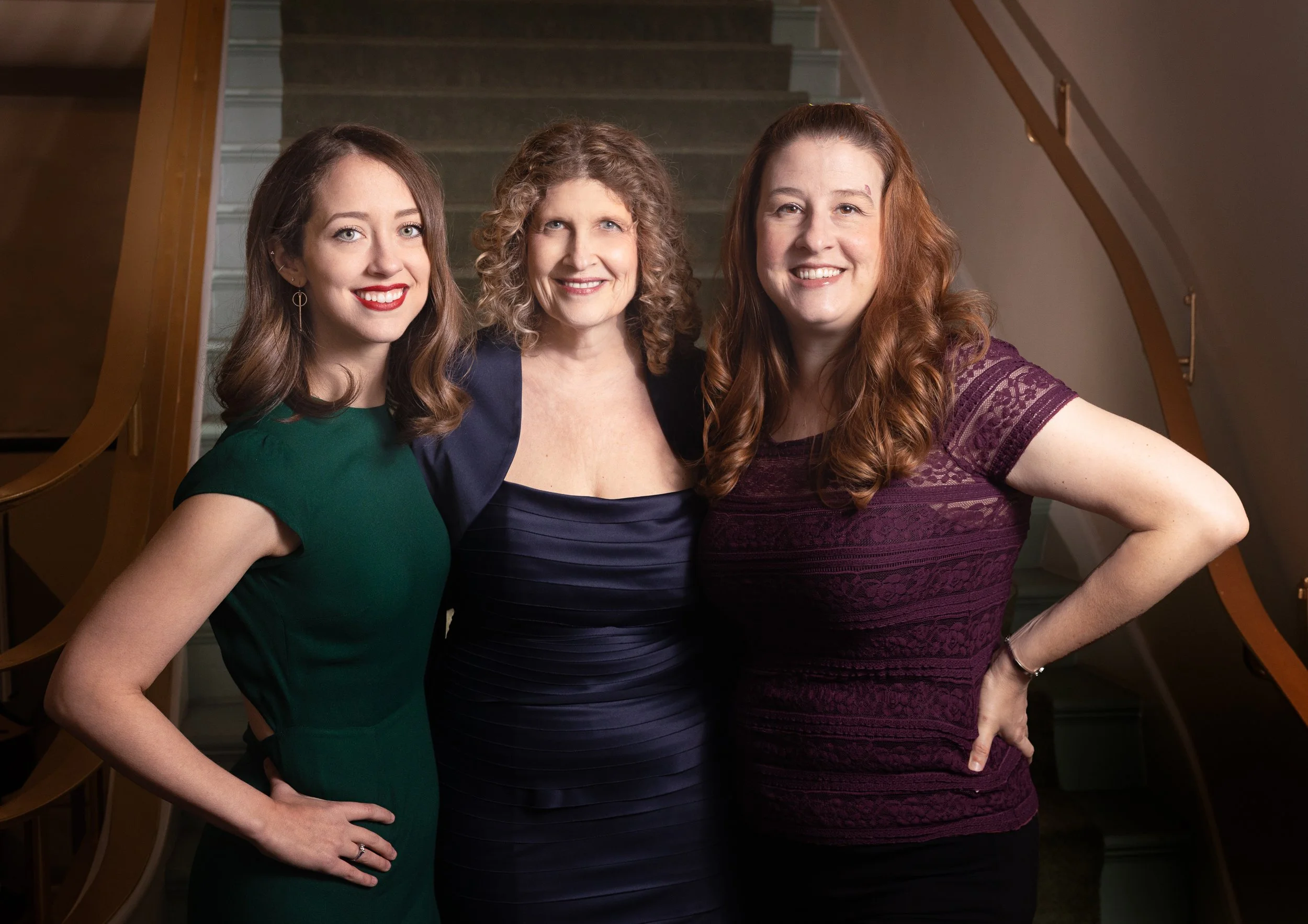
Ensemble for These Times (L-R: Megan Chartier, Nanette McGuinness, Margaret Halbig) (photo: Martyn Selman)
Winner of The American Prize in 2021 for Chamber Music Performance, Ensemble for These Times (E4TT) consists of award-winning soprano/Artistic Executive Director Nanette McGuinness, cellist Megan Chartier, pianist Margaret Halbig, and co-founder/Senior Artistic Advisor composer David Garner. E4TT made its international debut in Berlin in 2012; was sponsored by the U.S. Embassy in Budapest for a four-city tour of Hungary in 2014; and performed at the Krakow Culture Festival in 2016 and 2022, and at the Conservatorio Teresa Berganza in Madrid in 2017. In the US, E4TT has performed at the Paderewski Festival, the LAMOTH, UCLA, Longy School of Music at Bard College, Brooklyn Art Haus, and throughout the Bay Area.
E4TT’s five previous albums have all medaled in the Global Music Awards: Émigrés & Exiles in Hollywood (2024) featuring music by some of the talented émigré composers who fled persecution during WWII for Hollywood, changing movie music as we know it; The Guernica Project (2022), commemorating the 85th anniversary of the horrific carpet bombing of civilians and Picasso’s masterwork in response; Once/Memory/Night: Paul Celan (2020), honoring the centennial of the seminal 20th-century poet; The Hungarians: From Rózsa to Justus (2018), with works by Hungarian émigré Miklós Rózsa, and three of his compatriots who perished in the Holocaust; and Surviving: Women’s Words (2016), new music to poetry by women Holocaust survivors. The group recorded its sixth album, of music by Latine composers, in summer 2025 and launched the second season of its podcast of conversations with underrepresented creatives, “For Good Measure,” in 2024.
“Unafraid to display gutsy abandon” (South Florida Classical Review) E4TT cellist Megan Chartier has performed internationally as a soloist, chamber musician and orchestral cellist. Current positions include Opera San Luis Obispo principal cellist, and Vallejo Symphony section cello, following positions as Astralis Chamber Ensemble core cellist and Miami Symphony Orchestra principal cellist; she has recently performed with the San Antonio Symphony One Found Sound, Nu Deco Ensemble, and the Moscow Symphony Orchestra. She holds a Bachelor of Music from Eastern Michigan University and Masters of Music from the University of Michigan, Ann Arbor, Chartier is on faculty as Cello Lecturer at California Polytechnic State University in San Luis Obispo and Visiting Assistant Professor of Cello at the University of the Pacific Conservatory of Music.
E4TT pianist Margaret Halbig is in high demand as a collaborative artist in both the instrumental and vocal fields. She is currently Associate Chair and Voice Coach Managing Supervisor of the Voice Department at the San Francisco Conservatory of Music, she frequently collaborates with faculty and student instrumentalists. During the summer, Halbig is a faculty collaborative pianist and voice coach at Taos Opera Institute in New Mexico and is also on faculty at the Vocal Academy at the San Francisco Conservatory of Music. An advocate of new and contemporary music, she has been the pianist for the new music collective Wild Rumpus since its inception and frequently plays with the contemporary chamber group Earplay. She earned her DMA from UC Santa Barbara under the tutelage of Robert Koenig and also holds performance degrees from the University of Missouri, Kansas City Conservatory and University of Evansville, Indiana.
Soprano and E4TT co-founder and Artistic Executive Director Nanette McGuinness has performed performed operas, concerts, and recitals in 13 languages on two continents in over 25 roles, with the Silesian State (Czech Republic), Opera San Jose (Opera in the Schools), West Bay Opera, Pacific Repertory Opera, and Livermore Valley Opera, San Jose Symphony, Contra Costa Chorale, Monterey Peninsula Chorus, and the Palo Alto Philharmonic, among many. A passionate advocate of music by living composers and women artists, McGuinness has been featured on seven albums with Centaur and Yuggoth Records among others; her CD of music by 19th and 20th century women composers, Fabulous Femmes, was called “perfect for the song recital lover” by Chamber Music Magazine. She earned her PhD in Music at UC Berkeley (specializing in musicology), MM in Vocal Performance at Holy Names College, and BA at Cornell University.
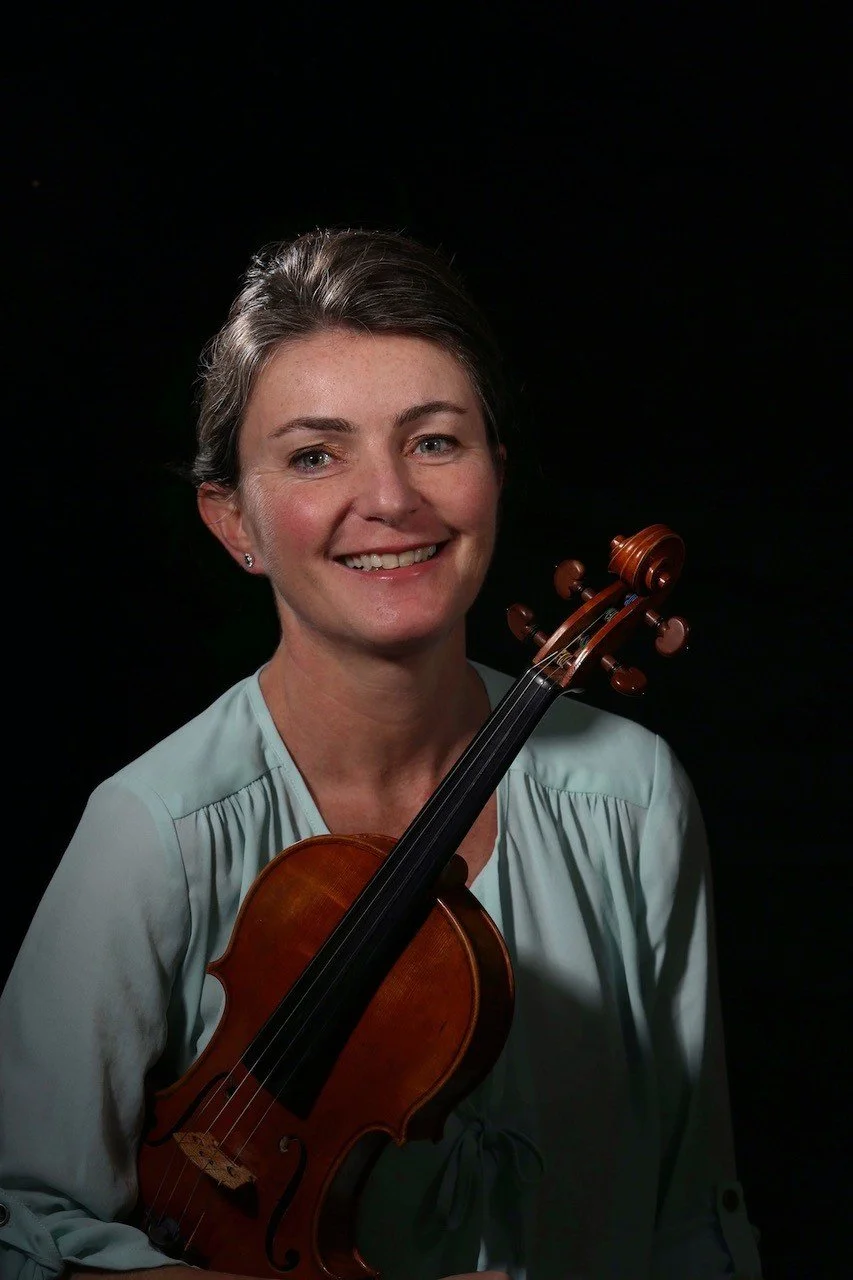
Lylia Guion (photo: Lasphotos)
Violinist Lylia Guion has performed as a soloist, chamber and orchestral musician in France and in the Bay Area. Her extensive orchestral experience includes the Orchestre Philharmonique of Radio-France (Paris) before moving to California in 1997, where she has performed with the Berkeley, Oakland, California, Marin, and Skywalker Symphony Orchestras, as well as Pacific Chamber Orchestra and Midsummer Mozart Festival. She also served as concertmaster with Livermore Valley Opera and Pocket Opera. An avid educator, she has taught in various music schools, coached youth orchestras, and organized community concerts. She is a Feldenkrais practitioner and currently applies this method at her private violin studio.

Chelsea Hollow (photo: Veronique Kherian)
Dazzling audiences with her easy coloratura, storytelling, and passionate performances, Chelsea Hollow loves finding new ways of connecting her art to the world around her. Her debut album Cycles of Resistance, includes 22 commissions in 8 languages chronicling international stories of human resilience. In recognition of this project, Chelsea presented on a panel hosted by the United Nations’ Office of Human Rights to discuss Art and Activism. Recent operatic performances include Harvey Milk Reimagined and Birds and Balls with Opera Parallèle, Dolores with West Edge Opera, and Albert Herring and Midsummer Night’s Dream with Pocket Opera. Concert solo appearances include Exsultate Jubilate (Zephyr Symphony), Concerto for Two Orchestras (Berkeley Symphony), Carmina Burana and Beethoven’s 9th (Golden Gate Symphony Orchestra) and Mozart’s Requiem and Rossini’s Stabat Mater (San Francisco City Chorus).
ABOUT THE COMPOSERS
Acclaimed Argentinian composer Claudia Montero (1962-2021) won four Latin GRAMMY® Awards. She was on faculty with the Generalitat Valenciana and composer in residence for the Palau de la Musica (Valencia). Performed worldwide, her works continue to be performed and recorded and have been premiered by the Royal Liverpool Orchestra, Orquesta de Cámara de Buenos Aires, the Orquesta de Cámara de Jeréz, Orquestra Pau Casals, Sinfonietta Paris, Turin Philharmonic, Taipei University Symphony Orchestra, Sinfonierorchester Kusel, Baltic Neopolis Orchestra, and Orquesta Nacional de Tango de Buenos Aires, among many. Collaborations included ensembles and musicians such as the Maganos Quintet, the American String Quartet, the Almus Quartet, the Kamer Quartet, the Barrenechea Dúo, the Billroth String Quartet, Il Concerto Accademico, Quatre U, Trío Luminar, Trío Brouwer, pianist Natalia González Figueroa, harpist Floraleda Sacci and guitarists José Luis Ruíz del Puerto, Wolfgang Weigel and Isabel Siewers.
Argentinian cellist, composer, arranger, conductor and musical archivist José Bragato (1915–2017) was born in Udine, Italy as Giuseppe. When he was a child, his family moved to Buenos Aires, where he grew up to become a leading figure in both classical music and tango, performing as principal cellist with major orchestras in Argentina and Brazil that included the Teatro Colón and the Buenos Aires Philharmonic. Known especially for his close collaboration with Astor Piazzolla and Nuevo tango (new tango), Bragato composed and arranged chamber music and tangos, winning a Latin GRAMMY® award in 2002 at the age of 87.
One of the foremost Mexican composers today, GRAMMY®-winner Gabriela Ortiz (b. 1964) is one of the most vibrant musical voices emerging on the international scene. Her musical language achieves an expressive synthesis of tradition and avant-garde by combining high art, folk music and jazz in novel, frequently refined, and always personal ways. Her compositions are considered both entertaining and immediate as well as profound and sophisticated; she achieves a balance between highly organized structure and improvisatory spontaneity. Ortiz has written music for dance, theater and cinema, and has actively collaborated with poets, playwrights, and historians. Her creative process focuses on the connections between gender issues, social justice, environmental concerns and the burden of racism, as well as the phenomenon of multiculturality caused by globalization, technological development, and mass migrations.
Born in Cuba in 1943, 2021 Pulitzer Prize-winning composer and conductor Tania León (b. 1943) is a vital personality on today's music scene, recognized for her accomplishments as an educator and advisor to arts organizations. She has been the subject of profiles on ABC, CBS, CNN, PBS, Univision (including their noted series "Orgullo Hispano" which celebrates living American Latinx whose contributions in society have been invaluable), Telemundo and independent films. Current appointments include Member of the Board of Directors, The MacDowell Colony; Vice President of the Music Division, American Academy of Arts and Letters; Founder & Artistic Director, Composers Now; and, most recently, Member of the Board of Directors, New York Philharmonic.
Puerto Rican-born composer and multi-instrumentalist Angélica Negrón (b. 1981) is known for playing with the unexpected intersection of classical and electronic music, unusual instruments, and found sounds. Premieres include a cello concerto performed by Yo-Yo Ma and the Los Angeles Philharmonic, conducted by Gustavo Dudamel, and a requiem for Dallas Symphony Orchestra. Recent commissions include works for Opera Philadelphia, New York Philharmonic, Seattle Symphony, Danish National Symphony Orchestra, the NY Botanical Garden, Kronos Quartet, Roomful of Teeth, and her Carnegie Hall debut, commissioned and performed by Sō Percussion. A founding member of the tropical electronic band Balún and guest curator for Los Angeles Philharmonic’s Green Umbrella series (2025), she has also been a Lincoln Center Collider Fellow, received the 2022 Hermitage Greenfield Prize, and was a teaching artist with NY Philharmonic’s Very Young Composers program.
Composer and educator inti figgis-vizueta (b.1993) works to reconcile historical aesthetics and experimental practices with trans & Indigenous futures. Described as a "rising new music star” (LA Times), with "smooth and serrated melodies”(NewYork Times) and an "intriguing…highly integrated sound” (Gramophone), “wrought from a language we'd do well to learn” (Washington Post), inti has been commissioned and performed by leading artists including the Los Angeles Philharmonic, Cincinnati Symphony Orchestra, American Composers Orchestra, Kronos Quartet, Attacca Quartet, Rothko String Quartet, Roomful of Teeth, violinist Jennifer Koh, and cellists Andrew Yee and Jay Campbell, among many others. She is the recipient of the Lotos Foundation Prize, ASCAP Foundation Fred Ho Award, National Sawdust Hildegard Award, Café Royal Foundation Music Grant and residency fellowships from Dumbarton Oaks, Civitella Ranieri, and Music at Copland House.
Berkeley-born composer Gabriela Lena Frank (b. 1972) has been Composer-in-Residence with the Philadelphia, Detroit, and Houston Symphony Orchestras. Founder of the Gabriela Lena Frank Creative Academy of Music (GLFCAM), she was included in the Washington Post's list of the 35 most significant women composers in history in 2017. She explores her multicultural heritage and identity through her compositions and has traveled extensively throughout South America in creative exploration. Her music often reflects not only her own personal experience as a multiracial Latina, but also refract her studies of Latin American cultures, incorporating poetry, mythology, and native musical styles into a western classical framework that is uniquely her own. Frank has received the Heinz Award and a Latin GRAMMY® as well as Guggenheim and USA Artist Fellowships.
Composer/librettist Carla Lucero (b.1964) focuses on social justice and giving voice to silenced and marginalized communities. She gravitates to biographical stories challenging long-held stereotypes, especially stories centered around women. Her critically acclaimed operas, Wuornos (2001 Yerba Buena Center for the Arts), Juana (2019, 2022 Opera UCLA and dell'Arte Opera Ensemble), Las Tres Mujeres de Jerusalén (2022, 2025 LA Opera), touch (2024 Opera Birmingham), and ¡Chicanisima! (2024, 2025, Quinteto Latino & Escenia Ensamble), have received grants and awards from Opera America, Creative Work Fund, NEA, and others. Her instrumental and choral works have been performed by internationally recognized choirs, symphonies and chamber ensembles. Lucero's goal is to uplift by contributing to positive change with her multilingual work, reflecting her cultures. She is currently commissioned for three operas with LA Opera, Opera Paralléle and Hawaii Opera Theatre.
San Francisco composer and pianist Brennan Stokes (b. 1990) received his Master’s Degree in Composition from the San Francisco Conservatory of Music and his Bachelor’s in Piano Performance from Pacific Union College. Past mentors include David Garner, Asher Raboy, and Lynn Wheeler. His compositions focus heavily on storytelling and have been described as “transportive.” Stokes enjoys finding ways of expressing his European, Peruvian, and queer identities in his works and other musical stylings. He also regularly performs and fundraises for multiple Bay Area nonprofit organizations and has won multiple titles, in drag as Nikita Vega.