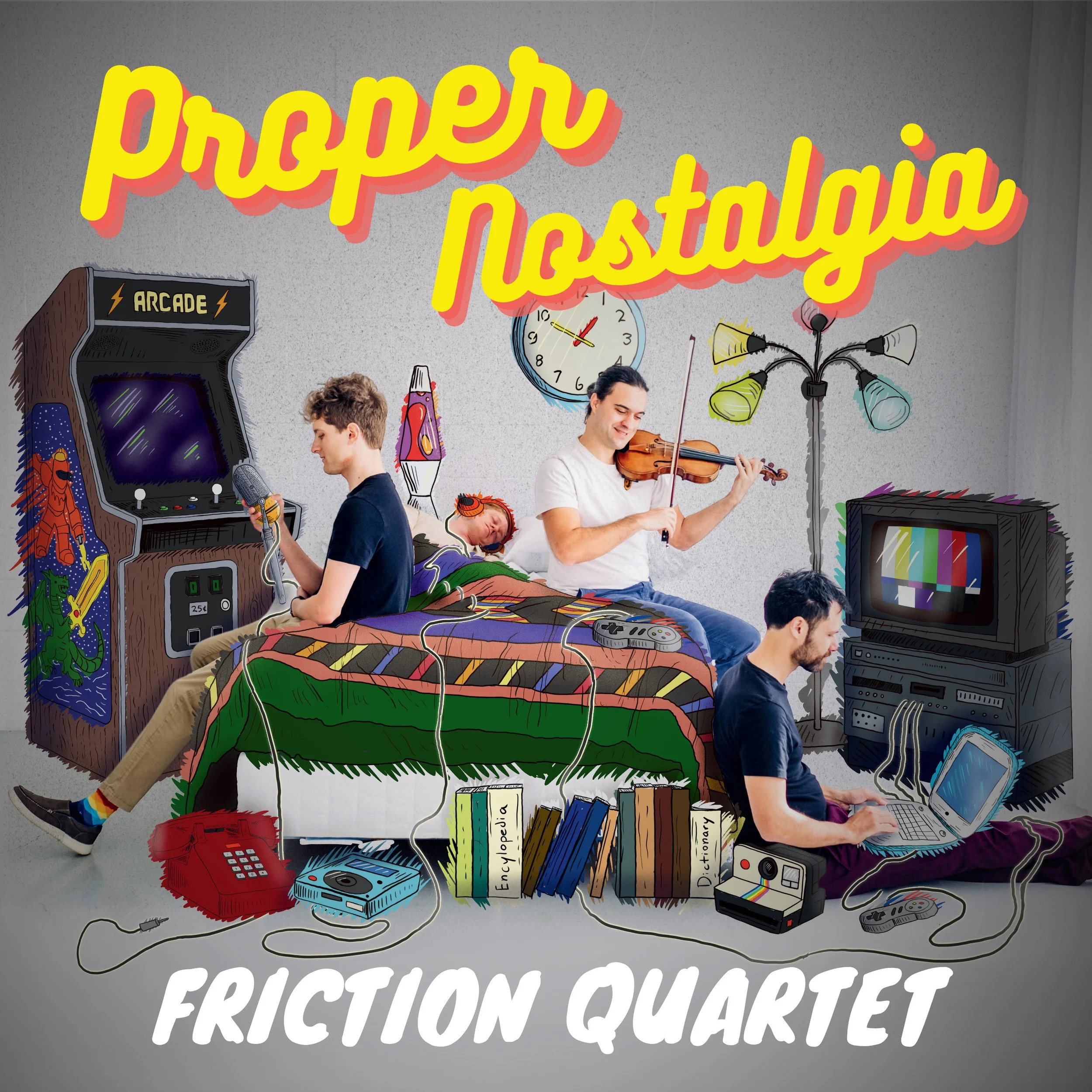
Album: Proper Nostalgia
Artist: Friction Quartet
Record Label: Aerocade Music
Catalog No.: AM021
UPC: 195269404963
Release date: March 20, 2026
Format: Digital and CD
Digital booklet: download here
Buy/stream:
Bandcamp | Apple Music | Tidal | Amazon Music | YouTube | Spotify
REVIEWS
“A multifaceted disc that introduces four thought-provoking pieces in highly accomplished performances.”
— Fanfare Magazine
CREDITS
Friction Quartet
Kevin Rogers, violin
Otis Harriel, violin
Mitso Floor, viola
Doug Machiz, cello
Producers:
Andrew M. Rodriguez (track 1-10),
Meerenai Shim (tracks 1-4, 15-16),
Friction Quartet (tracks 11-14),
Alex Dowling (tracks 15-16)
Mixing engineers:
Andrew M. Rodriguez (tracks 1-10),
Cory Todd (tracks 11-14),
Alex Dowling (tracks 15-16)
Tracks 1-4, 15-16 recorded on the Scoring Stage at Skywalker Sound, a Lucasfilm, Ltd., company. Marin County, CA
Recording Engineer, Leslie Ann Jones
Assistant Engineer, Dann Michael Thompson
Tracks 5-14 recorded at Tiny Telephone in Oakland, CA. Cory Todd, recording engineer.
Mastering engineer: Zach Herchen
Cover art: Otis Harriel
Friction Quartet photos: Debra Cheung
Additional graphic design: Meerenai Shim
Proper Nostalgia by Friction Quartet
Showcasing an innovative spirit of making music, a studio art piece free from analog constraints, and transfigured by an era of technology, this release features four new commissions by composers Michi Wiancko, Andrew M Rodriguez, Alex Dowling, and Isaac Io Schankler. Given no restraints for creative process than “treat the studio and production as part of the art,” the composers were able to create freely and fiercely. Proper Nostalgia, the album title, is that of Andrew M Rodriguez’s piece, and it is quite evocative of that freedom.
ABOUT THE ALBUM
This album was inspired in part by other great studio albums, but one in particular stands out - Attacca Quartet’s Real Life. Attacca created a work of studio art, expanding, challenging and transforming what a string quartet album could be. In admiration for this, we commissioned several of the pieces on this album to be written for the studio, and gave composers free reign in realizing that.
String Quartets historically are four analog wooden boxes with bows, generating the sound exclusively from the physical movement of the musicians’ and of course, friction between the bow and the strings. But the way we listen to music now and share it is wildly different from listening to music written for small rooms or concert halls. Recordings make it possible for our ears to hear things as if we are up close to each of the instruments at the same time, something we cannot recreate live. The studio also offers a wide range of control for edits and balance. That new way of listening motivated us to create an album that would be in this innovative spirit of making music, a studio art piece free from analog constraints, and transfigured by an era of technology.
The germ for the album started in the midst of the lockdowns and work from home era in 2021. Things were just starting to open up, but what was incredibly clear was that the way art was consumed and would be made had radically changed. In the spirit of this moment of remarkable change as a society, and as a performing ensemble, we wanted to commission four composers to write studio album pieces. After long discussions and listening sessions we settled on four outstanding artists: Andrew M Rodriguez, Alex Dowling, Annika Sokolofsky, and Michi Wiancko.
One question that each composer would ask us was “So are there any things you are looking for from me?” To which we would say “No! Write what you want to write, but treat the studio and production as part of the art.”
The range of approaches was thrilling, and also transformed from our original idea. In particular, Annika’s work transformed into something worthy of its own space, and so we have recorded this work and released it with EmmyJean Jenkins (Annika’s singer-songwriter alter ego) on her EP, Gay All This Time. The quartet is an epic grand ole opry style orchestra backing the Queer County and Western Folk Singer.
Also morphing from the original plan was the addition of Isaac Io Shankler’s unveiling. This work initially started as a collaborative project with other ensembles taking a part in it. But as it happens, a lot changed in 2020. We found ourselves in a situation where Friction and Isaac thought it best to move forward as a Friction Commission. We quickly fell in love with their piece. There are a ton of hidden meanings and quotes of other pieces sprinkled about (like Shostakovich and Beethoven). Isaac used words and initials created by the pitches in the musical material as a means of encoding messages. And while that may seem esoteric, it sounds anything but. When we recorded the work it felt as if it would be a perfect match with the other three pieces from our commissioning initiative.
The recordings took place in two separate studios, Skywalker Sound and Tiny Telephone. Both offered very different vibes and sound possibilities. Skywalker Sound is a massive space, giving musicians the ability to capture a live sound more similar to a reverberant hall. Whereas Tiny Telephone is designed with amplified instruments in mind, and therefore gives us an opportunity to really capture a crisp and more focused sound. We selected the space for the works based on what fit the piece best. Andrew’s and Isaac’s were recorded at Tiny Telephone, while Michi’s and Alex’s were recorded at Skywalker Sound. You can hear a strong sonic identity for each piece because of this.
Andrew asked us to also make some home recordings, complete with background noise and with directions to turn our mics into the walls. In some sense this makes the work recorded at a distance, much like the genesis of this whole project was dreamt up.
Having completed all the commissions, recordings, and thought about the order of the pieces we needed a title. We had a few in mind that were related to the concept of the commissions and album, but one kept returning to us, and that was the title of Andrew’s work - Proper Nostalgia.
Nostalgia is a funny thing; it’s something so many of us experience all the time, and yet it has a mysterious, private nature to it. It’s like a silent anthem we are all singing. It’s also the kind of word that struggles to be pinned down by definition.
A proper nostalgia goes beyond our general shared sense of nostalgia. A proper nostalgia is duly private, a secret world of our own memories, dreams, and desires. Andrew’s work brings us back to that place of childhood, to that secret world of laughing children. Days without worries. Days with freedom.
All of these works have their own silent anthem - Isaac’s scream in the face of police brutality and state violence, Michi’s furrowed brow and diligent DIRTWORK that is done by strong and stubborn hands, and Alex’s Inner Orbits capturing the ineffable music that exists in between the notes.
The studio transformed our string quartet, recording the works and collaborating with these amazing artists transformed us as players, and this album now serves to transform the listener. We couldn’t be happier with the result. Perhaps one day we’ll look back fondly at this album with its own nostalgia.
- Kevin Rogers
PROGRAM NOTES
DIRTWORK
My string quartet, DIRTWORK, begins from a deep and dark place somewhere inside of ourselves. A place not visible to the eye and requires some digging to find, but where roots discover nourishment and take hold. Then, over the course of four movements, the music emerges and blossoms into the open, creating space for movement, improvisation, tenderness, and textural exploration. Eventually, it comes back to where it started, turning inward once again. The title DIRTWORK was inspired by the song Digging in the Dirt by Peter Gabriel.
- Michi Wiancko
Proper Nostalgia
When I was approached to write Proper Nostalgia, my only concrete instruction was to conceive of a piece for string quartet that was intended to be recorded. The final “work” becomes the recording rather than the score. As I began to explore the possibilities of what this instruction meant, I kept coming back to the question of what a recording represents. There is a difference between a “live” recording of a piece of music and a “studio” recording. One serves as documentation of an event at a specific time, and the other is a construct to represent a piece of music in its ideal form. In a sense, what I was considering was the push and pull of what is “truth” and what is “fiction”. For Proper Nostalgia, what I landed on was using two types of recording and having them work as a counterpoint to one another. The opening of the piece employs raw “home” recordings, DIY recordings of the quartet in their own personal spaces playing through these sections of the piece for maybe the first time, maybe the third or the tenth time. These “home” recordings return multiple times in the piece and are juxtaposed with various levels of artificiality in the studio recordings. Movements 2, 3, and 5 explore different ways of manipulating the sonic experience of a string quartet recording; elaborate electronic synthesis, manipulation of the perception of space, and the use of overdubbing—a tried and true studio effect that can offer limitless possibilities. What this all has to do with “nostalgia” came about when I realized that the DIY, verite style recordings serve as a kind of memory. These recordings capture not only the performances but also the space they were in, and, in some cases, the world outside of a window at that specific point in time. Recording as documentation; documentation as memory. I followed this rabbit hole and started to contemplate the idea of what memories mean to us; how they inform us, shape us, and deceive us. A memory is linked to our own personal perception of an event. Over time, our mind can even alter a memory to become what we think happened rather than what did happen. Are our memories truth, or are they a type of fiction? Maybe it doesn’t really matter after all.
- Andrew M Rodriguez
unveiling
The root word for "apocalypse" can be literally translated as unveiling. We can imagine the apocalypse not as a single event but as an ongoing process, where long-held, cherished beliefs give way to painful truths. This piece runs the gamut of reactions to this process: fear, disillusionment, anger, sorrow, determination, acceptance. It reckons with the music of the past and present (clipping, Shostakovich, Low, Beethoven) through this lens, sometimes lifting material wholesale, sometimes smearing it beyond recognition.
unveiling was commissioned by the Friction Quartet, who have my greatest thanks.
- Isaac Io Schankler
Inner Orbits
For many years I composed by using electronics in all kinds of elaborate ways to create new sounds, and this became my main medium for artistic creation. In recent times, my methods have changed and I have started to feel that I can still express these ideas using only acoustic instruments. I also began learning cello quite recently and the physicality of that has influenced my writing and how I think about music.
For this piece, I wanted to take something electronic and make it acoustic. I took inspiration from the melodies and ideas in my Auto-Tune choir album Reality Rounds and re-imagined it for string quartet. This was an important process for me and it literally outlines the compositional move from electronic to acoustic forces. It’s exciting to see what can be created in this space and I’m finding the constraints to be refreshing as they guide me towards new ways of thinking.
- Alex Dowling
ABOUT THE ARTISTS
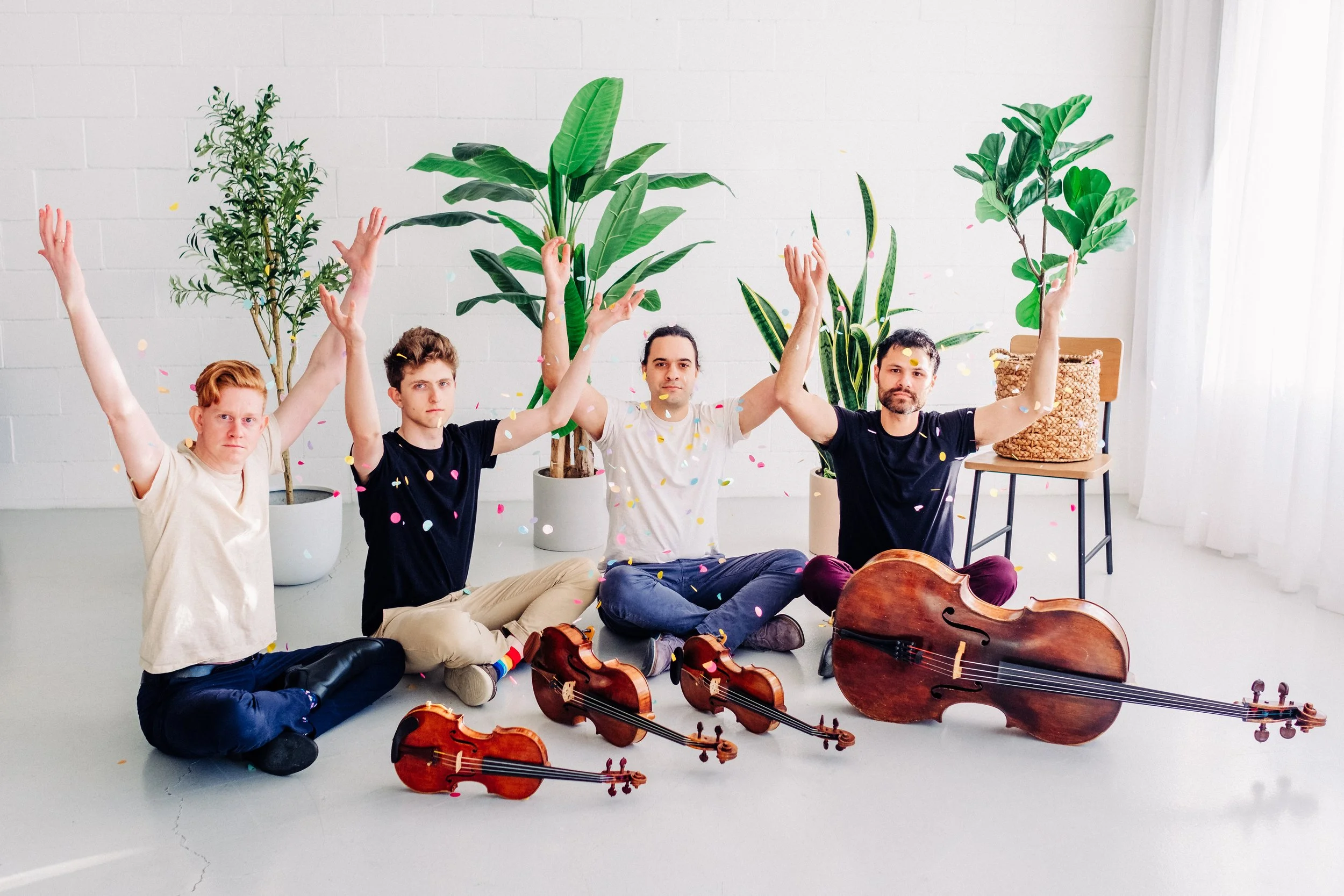
L to R: Kevin Rogers, Mitso Floor, Otis Harriel, and Doug Machiz. (Photo credit: Debra Cheung)
Friction Quartet, lauded for performances described as "terribly beautiful" (San Francisco Classical Voice), "stunningly passionate" (Calgary Herald), and "exquisitely skilled" (ZealNYC), is dedicated to modernizing the chamber music experience and expanding the string quartet repertoire. The quartet achieves its mission by commissioning cutting-edge composers, curating imaginative concert programs, collaborating with diverse artists, and engaging in interactive educational outreach.
Friction made their debut at Carnegie Hall in 2016 as participants in the Kronos Quartet Fifty for the Future Workshop. They returned in March of 2018 to perform George Crumb’s Black Angels as part of “The 60’s” festival and their performance was described as, “one of the truest and most moving things I’ve ever heard or seen.” (Zeal NYC) Friction’s video of the second movement of First Quartet by John Adams was named the #2 video of the year in 2015 by Second Inversion. John Adams shared this video on his own homepage and called it “spectacular.” Friction and Andy Akiho released a video of his piece, In/Exchange which was chosen by Second Inversion for their Top 5 videos of 2016 and was featured on American Public Media’s Performance Today.
Since forming in 2011, Friction has commissioned 47 works for string quartet and given world premiere performances of more than 100 works. They developed the Friction Commissioning Initiative in 2017 as a way to work together with their audience to fund specific commissions. The money raised to date has helped Friction commission a total of 16 new works, including six by young composers between the ages 16 and 21. Their most recent round of commissioning focuses on music written primarily for album format and includes composers Michi Wiancko, Andrew Rodriguez, Alex Dowling and Annika Socolofsky.
Friction has won two grants from Chamber Music America to commission a piano quintet from Andy Akiho and Comedia for string quartet, vocal quartet and harpsichord by Paul Mortilla. They have also won project grants from Intermusic SF and Zellerbach Family Foundation supporting the performance of commissioned works.
While Friction has garnered international attention as commissioners and interpreters of new music, they are also devoted to performing masterworks of the string quartet repertoire at the highest level. They won Second Prize in the 2016 Schoenfeld Competition, they were quarter-finalists in the 2015 Fischoff Competition and placed second at the 2015 Frances Walton Competition.
Friction has held residencies at the New Music for Strings Festival in Denmark, Interlochen Arts Camp, Lunenburg Academy of Music in Nova Scotia, and was the first ensemble in residence at the Center for New Music in San Francisco.
Friction Quartet is dedicated to building new audiences for contemporary music through interactive musical enrichment programs. They were awarded a 2019 Intermusic SF Musical Grant to develop a participatory educational program with composer Danny Clay that is designed to be accessible and sensory-friendly. They participated for three consecutive years in the San Francisco Symphony’s Adventures in Music program, visiting over 60 public schools annually. They have also given presentations at Oakland public schools through KDFC’s Playground Pop Up program. In collaboration with Meridian Hill Pictures, they created a short documentary, titled Friction, that profiles their early educational outreach in Washington DC’s Mundo Verde Public Charter School. Their presentations regularly utilize Doug’s adventurous arrangements of pop songs alongside excerpts from standard string quartet repertoire to help young audiences build connections to musical concepts.
Friction appears on recordings with 3232 Music, National Sawdust Tracks, Innova Records, Albany Records, Pinna Records, and many independent releases. They released their full-length debut album, Resolve, in 2018 through Bandcamp, and followed up with Rising. Friction has appeared on radio stations such as NPR, KALW, KING-FM, and KUT, among others.
Friction Quartet takes risks to enlarge the audience’s understanding of what a string quartet can be using arrangements of pop music, digital processing, percussion, amplification, movement, and additional media. Their multimedia and interdisciplinary projects have received critical acclaim. In 2017 they produced Spaced Out, an evening-length suite of music about the cosmos that utilizes surround sound electronics and includes a Friction Commission written by Jon Kulpa. The San Francisco Classical Voice called it “accessible, yet surreal.” No matter where their musical exploration takes them, they never lose sight of the string quartet’s essence– the timeless and endlessly nuanced interaction of four analog voices.
ABOUT THE COMPOSERS
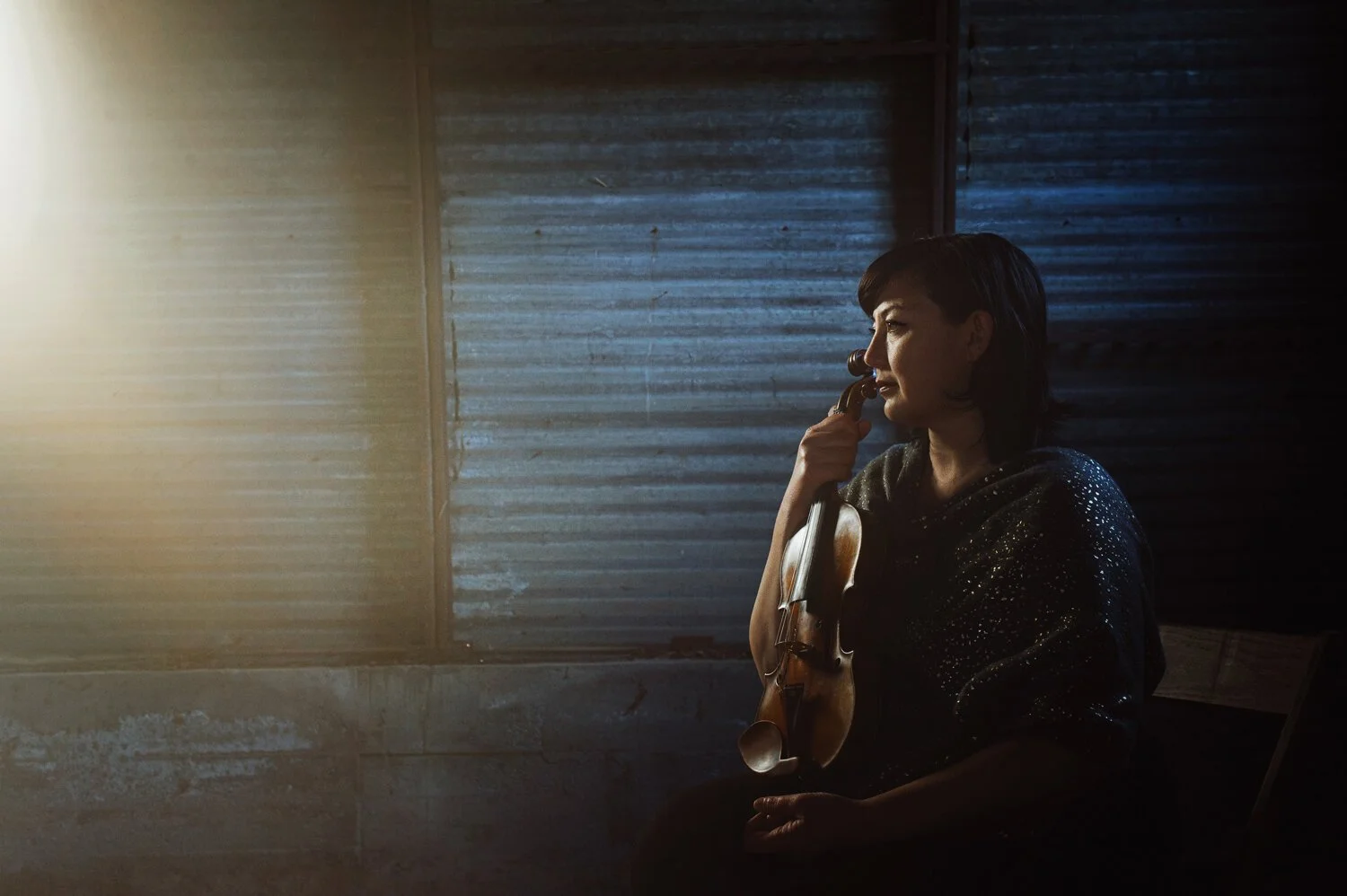
photo: Anja Schutz
Michi Wiancko is a composer, violinist, teacher, collaborator, and nonprofit director whose imaginative projects and multi-faceted organizational work prioritize musical and cultural diversity and community care.
Michi is Artistic Director of Antenna Cloud Farm, a music festival, artists retreat, and community organization based in Western Massachusetts. She also founded The Experimental Institute (Ei), a creative musical summer intensive for talented early-career artists, which has been led in collaboration with Mazz Swift, Xenia Rubinos, PaviElle French, Gabriela Lena Frank, and others.
Described by Gramophone Magazine as an "alluring soloist with heightened expressive and violinistic gifts,” Michi tours with Silkroad Ensemble and Rhiannon Giddens, gave her violin solo debuts with the New York Philharmonic and the Los Angeles Philharmonic, performed her recital debut in Weill Hall, and her most recent solo album, Planetary Candidate, was released on New Amsterdam Records to critical acclaim. Michi has also released a solo album of works by Émile Sauret on Naxos, recorded chamber works with Vijay Iyer for ECM, and has recorded two different projects for Nonesuch Records: a string quartet composed by Laurie Anderson, and a new work by Steve Reich entitled “Pulse” with the International Contemporary Ensemble (followed by a performance in Carnegie Hall as part of Reich’s 80th birthday celebration). Upcoming projects include arranging and recording with Yasmin Williams.
Recent compositions include works commissioned by Boston Chamber Music Society, Carnegie Hall’s Ensemble Connect, NOW Ensemble, Parker Quartet, Miro Quartet, violinist Alexi Kenney, Tessa Lark and Paul Neubauer at Seattle Chamber Music Society, Tucson Chamber Music Festival, Chamber Music Tulsa, The Met Museum, Experiments in Opera, and American Ballet Theater. Michi’s first opera, Murasaki’s Moon, premiered at the Metropolitan Museum of Art in 2019 in collaboration with librettist Deborah Brevoort. Since then, she has composed two more operas: Arkana Aquarium, commissioned by Experiments in Opera, and The Stream, commissioned by Baldwin Wallace and the Cleveland Lyric Theater.
Michi co-composed, performed, engineered, and mixed the original score of the film The Mend, profiled by Time Magazine as one of the Top 10 films at SXSW. She has worked closely with the indie rock band Wye Oak, re-imagining their songs for electro-acoustic ensemble. She has also arranged for the band EL VY (Brent Knopf and The National's Matt Berninger), whom she joined for an appearance on The Late Show with Stephen Colbert. Michi’s arrangements have been performed by the Chicago Symphony, Pittsburgh Symphony, New York Philharmonic, Buffalo Philharmonic, East Coast Chamber Orchestra, Orpheus Chamber Orchestra, The Knights, A Far Cry, The Saint Paul Chamber Orchestra, Orchestra of Brooklyn, Orchestra of St. Luke’s, Arkansas Symphony, Spokane Symphony, Harvard Chamber Orchestra, Burlington Chamber Orchestra, The Royal Conservatory of Music in Toronto, and others.
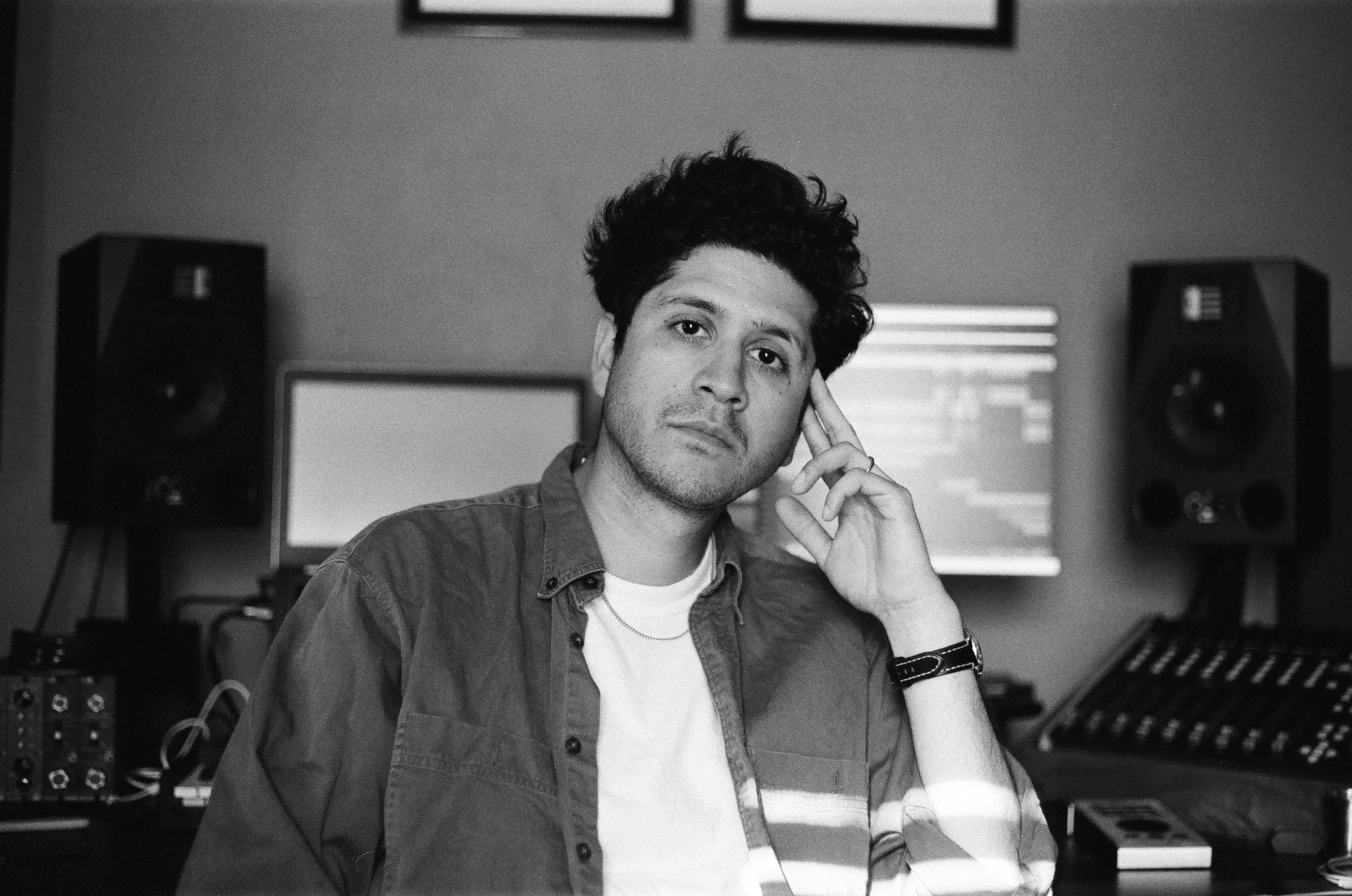
photo: self-portrait by Andrew M Rodriguez
Andrew M Rodriguez (b. 1989) is a composer, producer, songwriter, and audio engineer. Hailing from West Texas, Rodriguez’s passion for music was ignited by the intimacy and communal experience of his former small-town music scene. His music can be described by its use of contrast and form—often in conjunction—to create landscapes in which energy, texture, and technique are foundational elements for works that explore his own personal examinations of life and our own humanity. As a guitarist, he has recorded three full-length albums and toured internationally with the hardcore- punk band, Close Your Eyes. Rodriguez also uses his knowledge as an audio engineer to inform his compositions, often writing pieces for performer(s) and electronics. Recent commissions include an unconventional string quartet in 6 movements commissioned by Friction Quartet; chamber pieces for the National Orchestral Institute and the Caine School of the Arts at Utah State University (both commissions in conjunction with the Gabriela Lena Frank Creative Academy of Music); and solo pieces for performers such as percussionist, Megan Arns, and guitarist, Jamie Monck. Rodriguez has twice been a finalist for the ASCAP Young Composer Award, and was a nominee for a prize from the American Academy of Arts and Letters. Andrew is an alum of the Gabriela Lena Frank Creative Academy of Music, a former Bouman Fellow for Kinds of Kings’ 2019-20 residency at National Sawdust, and a former Composer Fellow at the National Orchestral Institute. He holds degrees from Hardin-Simmons University and the University of Illinois Urbana-Champaign, and currently resides in Champaign, Illinois.
As a producer and engineer, Rodriguez has worked on projects that range from indie rock bands, pop music, and classical recordings. His experience as a recording artist in Close Your Eyes helped shape the foundation of his practice as a producer in both preparing artists as they enter a recording environment and during the recording process. As a guiding principle, Rodriguez seeks to amplify the artist’s goals and utilize his own knowledge and experience to help realize their project.
Although his work as a composer and as a producer are often kept separate, the two practices will inform each other in various ways. Rodriguez often works in close collaboration with the performers for a newly commissioned work, imitating the way he approaches producing a record. While producing, he will often use his knowledge of music, technique, style, and form to help an artist polish their music to a brilliant finish. His unconventional career path in music was a deliberate choice to learn as much as possible and not be pigeon-holed into a singular field within the arts. It is this constant shifting, learning, and exploration that fuels his drive to create art, and create community through music.
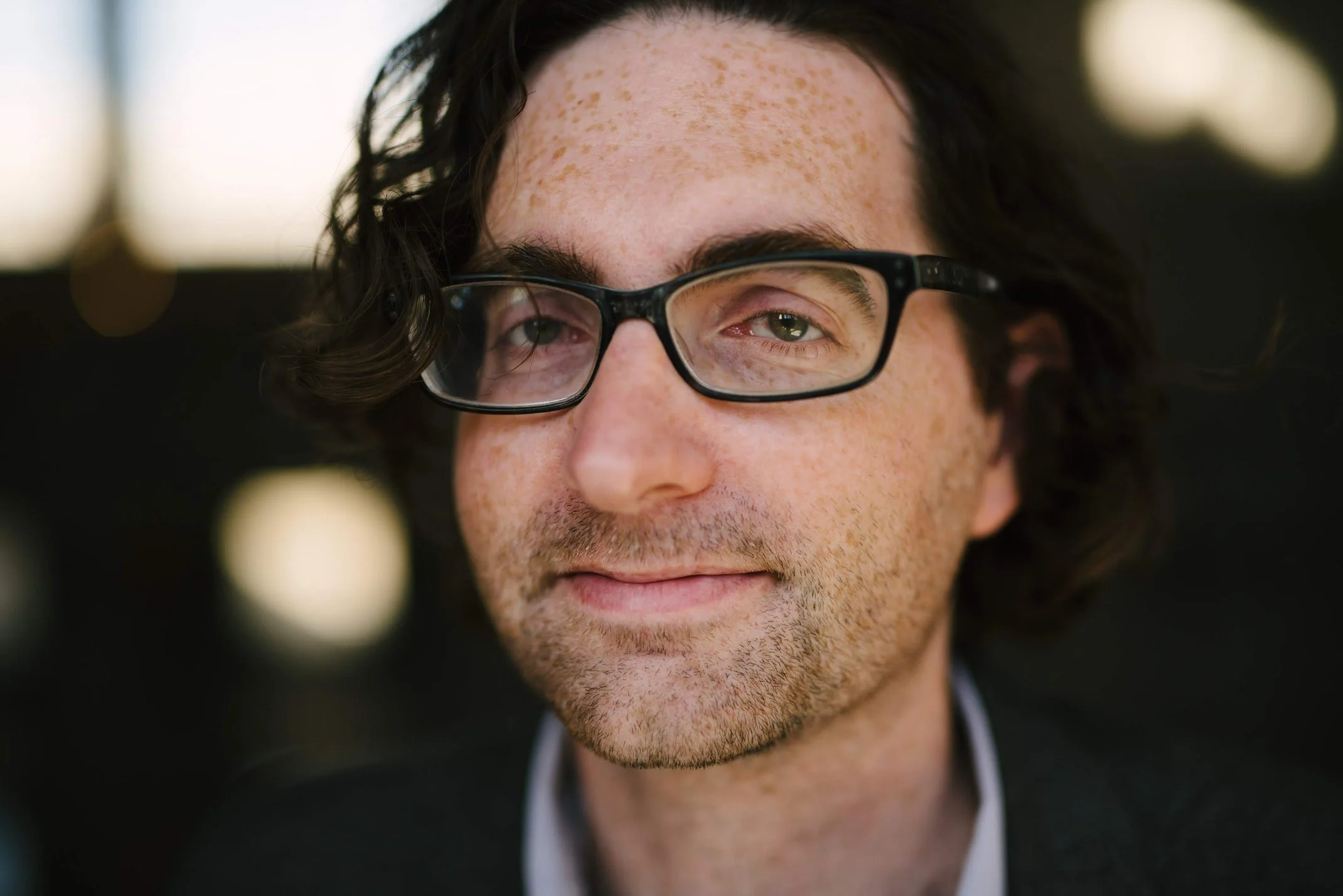
photo: Gabriel Harber
Isaac Io Schankler (they/them) is a composer, accordionist, and electronic musician based in Southern California. Their music has been described as "beautiful, algorithmic, organic, dystopian" (I Care If You Listen) and “remarkable listening” (Sequenza21). They have collaborated with a variety of musicians and ensembles, including the Ray-Kallay Duo, Friction Quartet, the SPLICE Ensemble, Autoduplicity, Nouveau Classical Project, gnarwhallaby, the Los Angeles Percussion Quartet, Lorelei Ensemble, Juventas New Music Ensemble, Nadia Shpachenko, Scott Worthington, and Meerenai Shim. Additionally, Schankler has written music for acclaimed video games like Ladykiller in a Bind and Analogue: A Hate Story.
Schankler is the artistic director of the concert series People Inside Electronics, and Associate Professor of Music at Cal Poly Pomona.
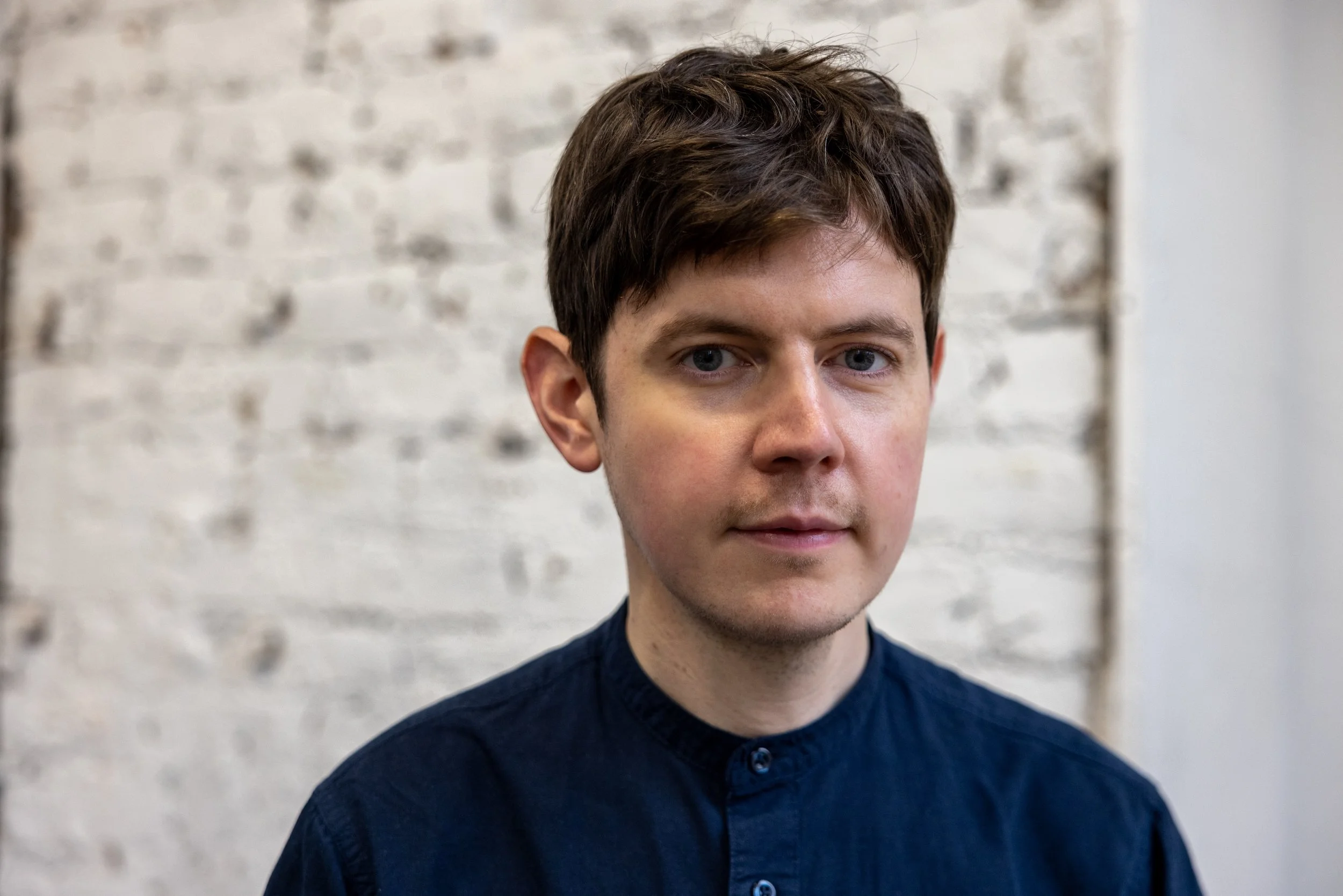
photo: Karen Cox
Alex Dowling is a GRAMMY-nominated Irish composer and producer whose work spans from acoustic ensembles to live electronics and opera.
Recent projects include a commission from Irish National Opera to create a work for boy soprano as part of their 20 Shots of Opera project and a theatrical collaboration for the show There at the Philadelphia Fringe Festival. His album of electronic vocal works, Reality Rounds, was released on Carrier Records and is described as “an enthralling trance of live-processed vocals and synthesizers" (The Road to Sound).
His music has been performed by ensembles internationally including the Irish National Symphony Orchestra, Crash Ensemble, Prism Saxophone Quartet, orkest de ereprijs, and Mivos String Quartet, and has been featured at festivals including Bang on a Can, MATA, and the Young Composers Meeting, Netherlands. He has written music for theatre and laptop orchestra, and his audiovisual installation Bodysnatcher was exhibited at the Eyebeam Gallery, NY and toured many other countries.
As part of his sound design/production work, he created the electronic music for the opera double-bill TRADE/Mary Motorhead by Emma O’Halloran that was showcased at the PROTOTYPE 2023 festival in New York, LA Opera REDCAT, toured multiple venues in Ireland, and is having its Australian premiere in Melbourne in 2026.
Dowling was recently named a MacDowell Fellow and an artist-in-residence at the Ucross Foundation in Wyoming. He studied composition as a PhD fellow at Princeton University.