
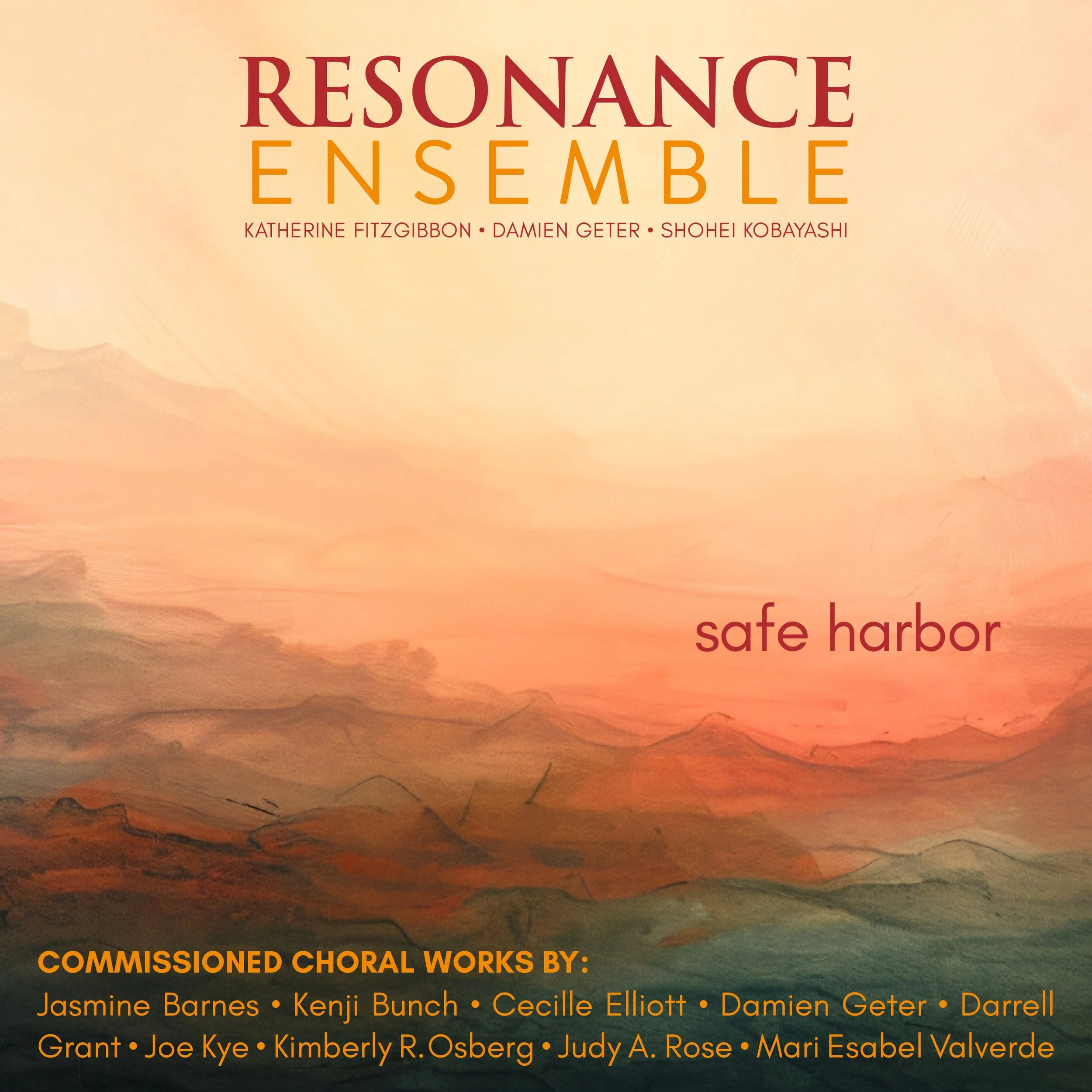
Album: Safe Harbor
Artist: Resonance Ensemble
Record Label: Aerocade Music
Catalog No.: AM020
UPC: 195269395810
Release date: January 30, 2026
Format: Digital and CD
Digital booklet: download here
Buy/stream:
Bandcamp | Apple Music | Tidal | Amazon Music | YouTube Music | Spotify
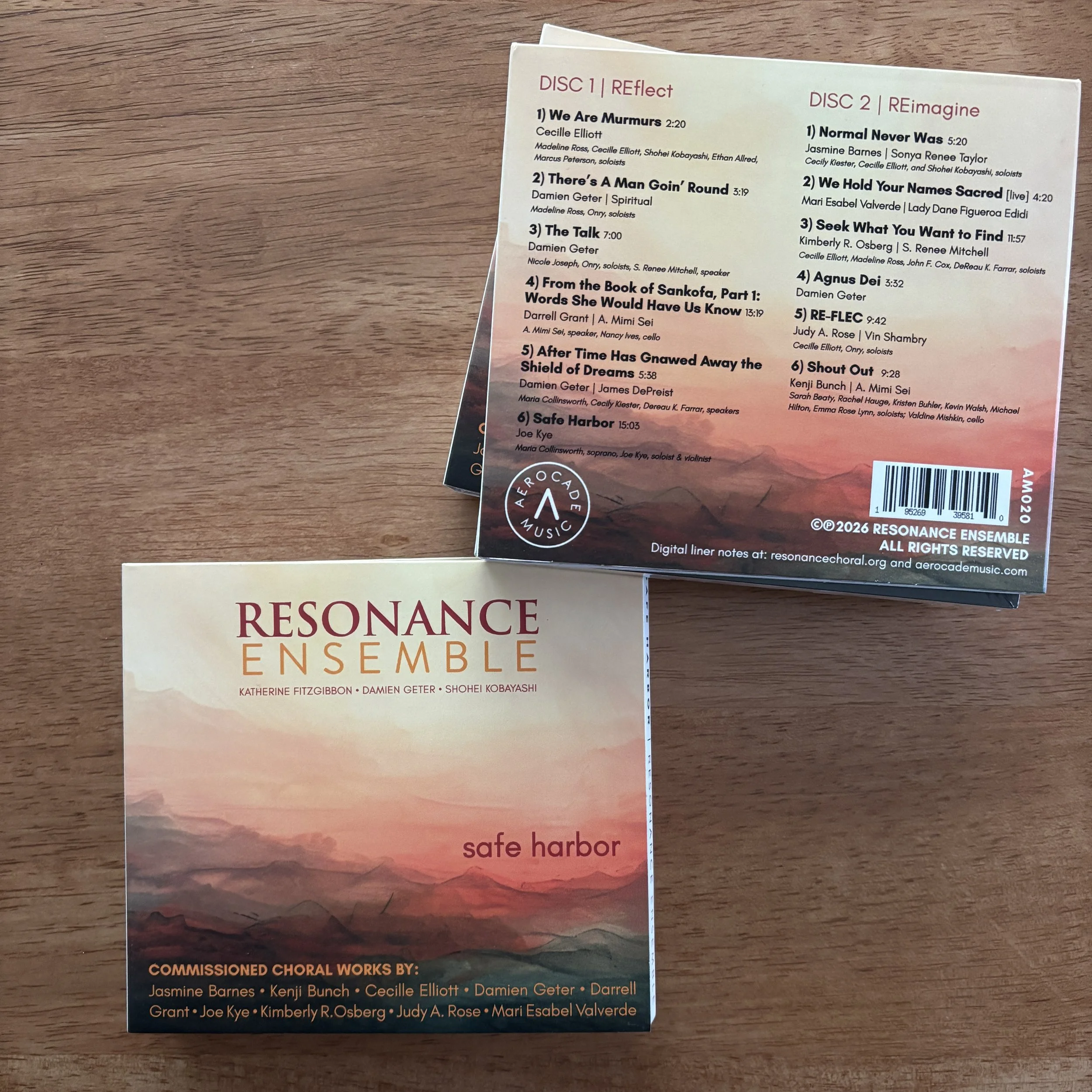
Two CD set of newly commissioned choral works by Portland, Oregon’s Resonance Ensemble. In a lovely digipack package.
CREDITS
Katherine FitzGibbon, Artistic Director
Conductor on Tracks 2, 5, 6-8
Shohei Kobayashi, Associate Conductor and Artistic Advisor
Conductor on Tracks 4, 9, 11-12
Damien Geter, Artistic Advisor
Conductor on Tracks 3, 10
SOPRANOS
Emma Rose Lynn
Maria Collinsworth
Katherine FitzGibbon
Rebecca Guderian
Nicole Joseph
Vakarė Petroliūnaitė
Madeline Ross
ALTOS
Sarah Beaty
Kristen Buhler
Phinizea Chadwick
Cecille Elliott
Cecily Kiester
Rachel Hauge
Jessica Israels
Emily Lau
Dee McDuffey
TENORS
Alonzo Chadwick
John Cox
Matthew Gailey
Les Green
Michael Hilton
Shohei Kobayashi
Derrick McDuffey
Zach Stoddard
BASSES
Ethan Allred
DeReau K. Farrar
Erik Hundtoft
Onry
Marcus Peterson
Kevin Walsh
INSTRUMENTALISTS
Hannah Brewer, piano
Ryan Downs, violin
Adam Eccleston, flute
Nancy Ives, cello
Joe Kye, voice & violin
Valdine Mishkin, cello
Gisela Rodriguez, violin
Lisa Zweben, viola
NARRATORS
S. Renee Mitchell
A. Mimi Sei
PRODUCERS
Katherine FitzGibbon, Shohei Kobayashi, John Cox (Track 1), Jessica Israels (Track 6), Damien Geter (Tracks 2 and 5)
RECORDING/MIXING ENGINEERS
Matt Greco
Alan Niven (Track 8)
All tracks except Disc 2, Tracks 1 & 2 recorded at The Hallowed Halls, Portland, OR.
Track 7 recorded at The Rye Room, Portland, OR.
Track 8 recorded live at Winningstad Theatre, Portland, OR.
MASTERING ENGINEER
Zach Herchen
ART DIRECTION & DESIGN
Liz Bacon Brownson, Oh! Creative
COMMUNICATIONS AND ARTISTIC COORDINATOR
Kimberly Osberg
Safe Harbor
by Resonance Ensemble
“Safe Harbor is an invitation to reflect on our histories and to reimagine a world where all people are safe, connected, nourished, and fulfilled. These twelve works, commissioned and premiered by Resonance Ensemble, are personal and timely gifts to the choral repertoire.
The album unfolds in two parts:
REflect invites listeners to explore our histories—moments that shape us, stories that deserve to be heard, and the challenges we carry forward.
REimagine envisions a future of possibility, where communities lift each other, voices once unheard are honored, and music inspires action and connection.
Safe Harbor is more than an album — it is lived experiences transformed into sound, offering a musical space to pause, connect, and reimagine what a world built on care and community can be.”
— Katherine FitzGibbon, Artistic Director
PROGRAM NOTES & TEXTS
We Are Murmurs
Music and text by Cecille Elliott
Commission Story
Launched in 2014, the Dirty, Stupid Music series has become a beloved Resonance Ensemble tradition— an evening devoted to showcasing the solo talents of select Resonance musicians in an intimate, cabaret-style setting.
For the 2023 edition, we worked closely with the performers to craft a full evening of music spanning multiple styles, exploring what it means to be individuals within a community.
We commissioned composer, lyricist, vocalist, and multi-instrumentalist Cecille Elliott — whose work bridges classical repertoire, close harmony jazz, indie pop, and electronic music —portland to create a new work for vocal quintet. The resulting song, “We Are Murmurs,” has quickly become an integral part of Resonance’s repertoire.
Program Note
We Are Murmurs is about experiencing very sudden grief. It explores the notion of not being ready for change, and change coming anyway. To understand a certain type of grief—and the disbelief that can accompany it.
This was my first time having an experience like this–of writing something, rehearsing it with other people and directing what we’re going to do with it. I only started performing sets of original music a few years ago, though I’d been writing well over a decade before that. To have the ability to compose/write music that needs more than just me as a musician to execute it, and then to be able to share it with others, that experience has been eye-opening, humbling, a huge honor. I want to keep writing and sharing. I’m so grateful to the four other vocalists who joined me on this. I felt very self-conscious and they embraced my work and gave it life. Their support meant so much.
— Cecille Elliott
We Are Murmurs
We are murmurs
calling out
We are murmurs
calling out.
We are breaking,
separating.
We keep on separating from each other.
We live, we die
We love, we cry.
We are starlight, galaxies apart
We keep on separating from each other.
Didn’t want to see it (didn’t want to see it)
So it came from nowhere
Was there a warning (there was a)
It was dead by morning.
Don’t wanna believe it (don’t wanna believe it)
But there’s no escaping it (but there’s no escaping it)
Was there a warning?
This wasn’t what I planned
I wasn’t ready
Bury our history
Make it a mystery
And we’ll keep separating from each other
And looking back only to blame the other
So we keep separating from each other
There’s a Man Goin’ Round
Spiritual, arranged by Damien Geter
Commission Story
In 2017, Resonance Ensemble changed its mission from a broader multidisciplinary focus to its current emphasis on music that sparks meaningful social change. For the first concert of the new season, Damien Geter -- then a member of Resonance’s Board of Directors and a singer with the ensemble -- arranged the spiritual “There’s a Man Goin’ Round Taking Names.”
That year, Geter approached Artistic Director Katherine FitzGibbon with an idea to create a large-scale Requiem for large choir, SATB soloists, narration, and orchestra. This work became An African American Requiem, the first Requiem to memorialize Black Americans lost to racial violence in the United States. The 2017 arrangement of “There’s a Man Goin’ Round Taking Names” became the opening to the Liber Scriptus movement.
Program Note
The origin of There’s a Man Goin’ Round Takin’ Names is unknown to me, but I am positive that its meaning is just as relevant in today’s world as it was when it was first sung.
The symbolism of ‘The Man’–the representation of the systematic racism that is woven into our society which is used to oppress those who are not in power–has existed since before the founding of the United States. ‘The Man’ literally took the names of enslaved Africans and African Americans, and today he comes to take those through the senseless shooting of Black people.
Nina Simone said, “The artist’s duty is to reflect the times in which we’re living.” As a result, I decided to arrange this song with the harsh realities of our country ever present in my mind – with reverence for those who have lived and who continue to live under the afflicting hand of ‘The Man.’”
-—Damien Geter
There’s a Man Goin’ Round
There’s a man goin’ round takin’ names,
There’s a man goin’ round takin’ names,
He has taken my father’s name,
And he left my heart in vain,
There’s a man goin’ round takin’ names.
There’s a man goin’ round takin’ names,
There’s a man goin’ round takin’ names,
He has taken my mother’s name,
And he left my heart in vain,
There’s a man goin’ round takin’ names.
There’s a man goin’ round takin’ names,
There’s a man goin’ round takin’ names,
He has taken my brother’s name,
And he left my heart in vain,
There’s a man goin’ round takin’ names.
Oh, Death is that man takin’ names,
Oh, Death is that man takin’ names,
He has taken my sister’s name,
And he left my heart in vain,
Oh, Death is that man takin’ names.
The Talk: Instructions For Black Children When They Interact With The Police
Music and text by Damien Geter
Commission Story
Intensive Care, performed on June 9, 2019, was a performance reflecting on all whose early days of parenthood are different than envisioned—with babies born early, babies sick, babies lost. These often unseen stories are also infused with hope, resilience, and transformational love.
“When planning the repertoire for Intensive Care, I was struck by the absence of perspectives from parents of color, especially Black parents, in the choral canon,” said Artistic Director Katherine FitzGibbon. “Artistic Advisor Damien Geter and I explored works by composers we admire, and kept thinking about the conversations Black parents have about safety and encounters with police. Damien said, ‘We need a piece for that. I’ll write it.’”
Program Note
There comes a time in every child’s life when they will have “the talk” with a trusted adult. That talk is usually centered around topics relating to sexual maturation – the birds and the bees.
However, in the life of a black child, there’s an additional talk that needs to happen; what to do if they are pulled over or have an encounter with the police. It boils down to four basic principles with the fourth being the ultimate goal:
Pull over. Don’t run. Keep calm.
Keep your hands where they can see them.
Be polite. *Save your rage.
Get home safely.
The instructions and the music are succinct. A narrator speaks instruction before the singer begins each section. Starting in C minor, the piece wanders through a myriad of tonal centers until it arrives “home” in the end in C major.
— Damien Geter
*The phrase “save your rage” is credited to Jasmine Love.
The Talk:
Instructions For Black Children When They Interact With The Police
Pull over. Don’t run. Keep calm.
Keep your hands where they can see them.
Be polite. Save your rage.
(“Yes sir.” “No ma’am.”
“Please.” “Thank you.”)
Get home safely.
(“Even when I held you as a baby,
I knew we would have this talk
to keep you alive,
so get home safely.”)
From The Book of Sankofa, Pt 1: Words She Would Have Us Know
Music by Darrell Grant, text by A. Mimi Sei
Commission Story
In spring 2024, Resonance Ensemble presented Amendment: Righting Our Wrongs, a program of composers, poets, and activists exploring how imagining a more just future requires that we know our past. The programwas presented in collaboration with Taylor Stewart, founder of the Oregon Remembrance Project, who shared with us his story of helping Oregon communities reckon with and reconcile their histories of anti-Black lynching and violence. The centerpiece was the world premiere of From the Book of Sankofa, a work for choir, cello, piano and speaker by composer Darrell Grant and writer A. Mimi Sei.
Program Note
From The Book of Sankofa, Pt.1: Words She Would Have Us Know is a poem to the future that takes its cue from the cultural memory and ancestral wisdom that we, as Black people, carry with us from the past into the present and beyond.
Sankofa is a Twi word from the Akan tribe in Ghana that literally means to “Go back and get it.” Often represented by the symbol of a bird with its head turned backward, carrying an egg in its mouth, it represents the idea of looking back at our past to learn from it and move forward. Both the symbol and concept of Sankofa were widely used during the transatlantic slave trade as a way for enslaved Africans to connect with their heritage and culture. The idea also has a strong connection to social justice, as it encourages us to remember the struggles and triumphs of our ancestors, and to use that knowledge in our pursuit of a better future.
Musically, the piece is informed by my love of polyphony and counterpoint, as well as a jazz pianist’s desire to play with harmony. It celebrates what I believe is the transcendent magic of choral singing — the coming together of multiple voices into a powerfully unified whole, while leaving room for the individuality of expression embodied in jazz and gospel music.
I was excited to collaborate in the creation of this piece with Aminata “Mimi” Radia Sei, a Sierra Leonean-American, Portland-based writer and social justice advocate, whose powerful, poetic voice provides both anchor and throughline for this work.
In our early discussions about the piece, Mimi spoke of the tension between acknowledging the effects of historical trauma and oppression and the desire to reframe our narratives in order to illuminate the treasures obscured by the pain of the past. She spoke about the idea of freedom of spirit — a freedom that isn’t weighed down by the need to address past burdens, but rather highlights the liberatory potential of BIPOC ways of seeing and being, cultural knowledge, and the rich diversity of Black experiences. Through this revelatory lens, we can rise with resilience and perseverance into the future. As the whispered instructions that introduce the piece encourage us to do, we can “Go, look, seek, take, return.”
As a first step in the collaborative process, Mimi and I came up with a list of twelve words — Mission, Essence, Reflection, Progress, Reimagine, Channel, Dignity, Migrate, Reincarnate, Piety, Reverence, Stir — that could serve as inspiration for the text. These are the Words She Would Have Us Know, referred to in the piece’s subtitle. As I composed, I also found myself weaving them into the fabric of the piece itself.
It was a welcome challenge to create a narrative arc —a journey — within a single movement work. Mimi’s vivid text supplied ample fuel for a variety of musical and emotional colors. The opening words of the first stanza: “A sacred longing opens up a heart in song,” inspired both the lyrical accompaniment and the melodic impetus for the cello, whose obligato represents the flight of the Sankofa bird.
Mimi’s second stanza shifts to a darker and more somber tone that I marked “forceful and stark.” A repeated diminished progression in the piano provides underscore for the recitation, and grounds the ensemble’s resolute declarations of “a soul drenched in battle.” Stanza three starts from a place of both longing and reflection for “a sweet haven for dreams laced in song,” which, for me, evokes the soulful harmony of Negro spirituals in the US and the Mbube choral music of South Africa. The choir responds to Mimi’s final stanza with an anthemic affirmation of “unmatched prowess,” and “persistence reborn,” which lifts us into a coda that embraces the joyous rhythmic pulse at the heart of Afro-diasporic expression, until we return, strengthened and empowered, to where we began, with a prayer of benediction and gratitude.
People might rightly ask if this is a jazz piece. I would respond that, while it is informed by jazz harmonic and rhythmic language, my intention is a personal synthesis that draws on the many influences that have shaped my musicmaking. I hear echoes of Thomas Tallis, The Staple Singers, Herbie Hancock, Caroline Shaw, Franz Schubert, Bobby McFerrin, and Maurice Ravel, among others.
I hope that The Book of Sankofa, Pt.1: Words She Would Have Us Know provides listeners an opportunity to reflect on the questions of what we will pass on, what we must sacrifice, and what must we always remember in order to realize the dreams we hold for ourselves, our children and our communities.
I’m grateful to Resonance Ensemble for this opportunity, and for the commitment and consummate artistry that they bring to the endeavor of creating music that reminds us of our humanity. I dedicate this piece to my parents and grandparents, whose courage and perseverance blessed me with this life.
—Darrell Grant
From The Book of Sankofa, Pt 1: Words She Would Have Us Know
Go. Look. Seek. Take. Return.
Mission, Essence, Reflection, Progress,
Stir, Reimagine, Channel, Dignity, Migrate,
Reincarnate, Piety, Reverence, Stir!
A sacred longing opens up a heart in song
Memories weighted in sorrow drifting along
Wisdom awaits at a new home
Unfettered pride. Dignity restored.
A storied journey ensconced in a heart’s song
A soul drenched in battle all along
Has come alive, unscathed, drowned in passion
Unwavering courage. Resolve reincarnated. Go.
Mission, Essence, Reflection, Progress,
Stir, Reimagine, Channel, Dignity, Migrate,
Reincarnate, Piety, Reverence.
Go. Look. Seek. Take.
A sweet haven for dreams laced in song
Majestic and bold, inspiring sweet evensong
I march for the kingdom. I strut in sacred regalia
Unbridled confidence. Essence reignited.
I am a master of my soul. Our souls united in song.
Where once broken, now restored and strong.
I move for a people! I move for a tribe!
Unmatched prowess! Persistence. Reborn.
Go. Look. Seek. Take. Return. Sankofa.
Unfettered. Unwavering. Unbridled. Unmatched. Sankofa.
After Time Has Gnawed Away the Shield of Dreams
Music by Damien Geter, text by James DePreist
Commission Story
Resonance’s YouTube series Under the Overpass celebrated our hometown of Portland, Oregon—and the spaces that allowed our artists to keep creating during an unprecedented moment. Beginning in the summer of 2020, singers and spoken-word artists gathered in resonant corners of the city—six feet apart, masked, yet still together—offering performances in gritty, hauntingly beautiful acoustic spaces.
Each episode spotlighted a different Portland bridge overpass, with short, powerful performances released and freely archived online. In June 2021, the complete series was made available worldwide as a single collection. After Time Has Gnawed Away the Shield of Dreams served as the final installment, filmed beneath the iconic Ross Island Bridge.
Program Note
After Time Has Gnawed Away the Shield of Dreams, written for 16 voices, piano, and flute. Flutist Adam Eccleston joined Resonance Ensemble musicians for this powerful debut.
Geter’s work sets a poem by the late James DePreist—renowned American conductor and honored Laureate Music Director of the Oregon Symphony. His text, a meditation on memory, resilience, and the rising phoenix, resonated deeply with the moment in which the piece was created.
We are especially grateful to Ginette DePreist, who not only granted permission to use her husband’s poetry but also joined us during the filming. Her presence, warmth, and generosity imbued the project with profound meaning.
Marking a transition from the isolation of the pandemic toward the hope of a more equitable future, the premiere also carried a dedication: To the victims of the 1921 Tulsa Massacre. In honoring that history—its grief, its erasure, and its enduring impact—we affirm our commitment to remembrance and to the ongoing work of confronting racism in our own time.
After Time Has Gnawed Away the Shield of Dreams
AFTER TIME HAS GNAWED AWAY
the shield of dreams
and placed at risk
dreaming.
The remnant self begins a benediction:
prelude to
a phoenix song.
Safe Harbor
Music and text by Joe Kye
Commission Story
Immigration and asylum continue to shape political and public discourse in the United States. In 2020, Resonance Ensemble presented Safe Harbor, a concert exploring the diverse experiences of coming to the U.S., including immigration, asylum, and exile.
For this project, the Ensemble commissioned composer, electronic artist, and violinist Joe Kye to create a new work reflecting on his own journey. Kye wove together Korean and American folk music with improvisation, crafting a rich sonic tapestry. Original text served as the foundation for full choral textures, solo and background vocals, and spoken elements, resulting in a work that is both intimate and expansive.
Program Notes
Inspired by my journey as an immigrant as well as the current humanitarian crisis at our southern border, Safe Harbor is my personal exploration of movement and migration.
The piece starts where we all do—with our mothers. My first memory is auditory; I remember being carried by my mother, my ear pressed between her shoulder blades. I could hear her singing softly, the sweet folk lullaby muffled by the sound of her heart and body as I drifted off to sleep. This lullaby, the sound of a cuckoo bird, and the distinct rhythm that accompanies the lullaby as it begins to expand represent my childhood in Korea.
My parents told me we would move to America when I was six, and I remember the fear, sadness and anxiety as the move neared. Even today, the narrative surrounding migrants entering America rarely mentions the emotionally fraught decision to leave home. We like to think of America as a miracle land—of course everyone wants to come here—without considering the grief and inner conflict of leaving your world behind.
I try to capture this in Safe Harbor, especially from the viewpoint of my parents, who left Korea at age 33 with their two young children in search of opportunity. They left their families, dear friends, language, food, and all that they had accomplished in order to build upon their hopes for the future.
And yet, America proved to be far harsher than the dreamland we had built in our minds. The next portion of the piece tries to capture the reality of being a person of color and immigrant in this country. From unfair media representations to aloof cashiers, jokes that highlight my Otherness to micro-aggressions, it’s been a constant struggle to settle into my identity as an Asian-American and to truly feel like I belong in this country. Furthermore, my parents, who moved back to Korea in 2008, struggle to connect more deeply with their children, who grew into members of a culture they could never fully access. My sister and I, on the other hand, had to live two identities—a Korean at home, yearning to be more like our American friends, and an American in the world-at-large, yearning to bring our full selves into the public realm without fear of xenophobic reprisal.
The final part of the piece is a meditation of sorts, a personal mantra for moving from disembodiment and unbelonging to rooted self-empowerment and the communal building of a more compassionate collective consciousness: “Breathe. Be. Build. We. Home. Sea. Sail. Me.” I offer myself space; encourage myself to create the world I want to live in; forgive myself for having a nontraditional sense of home, and instead celebrate the very nature of my fluid identity.
As all the voice parts slowly join in this chorus, I hope that we can also join together in building an America that lifts up the voices of those unheard and unsupported, that we may see their suffering as ours—and that, together, we can envision and build a land that is greater than the one we inhabit now.
Cue the cuckoo birds.
—Joe Kye
Safe Harbor
(Ma bbuk goong)
(Jal ja da oo di hyun-ee)
Joe I must leave you now
(Jal ga da jan da)
Don’t go, don’t leave me here
I know, I know it’s only for a moment
I’m told, I’m told there’s nothing here
We’ll go, we’ll go if only for our daughter
and her brother.
I must leave you know
(don’t go, don’t go)
Remember me, don’t forget me
O home, sweet home, where are you now?
(bbuk goong)
I’ve only known your comfort for a moment
Oh child, oh child how are you now?
Let’s wipe your tears and we’ll go find your mother and your father
(bbuk goong)
I must leave you now
(don’t go, don’t go)
I must leave you now and go alone
(I know, I know)
Remember me, don’t forget me
Remember me, don’t forget me
I wish I knew where I was going
I wish I knew where I have been
This land has claimed your cedar children
And taken all that they have seen
Breathe. Be. Build. We.
Home. Sea. Sail. Me.
Breathe out. Believe (We),
(home) Go out.
Sail on free.
Home. Sea. Sail. Me.
Breathe. Be. Build. We.
(bbuk goong)
Normal Never Was
Music by Jasmine Barnes, text by Sonya Renee Taylor
Commission Story
In spring 2021, amid ongoing challenges for the arts, Resonance Ensemble launched Commissions for Now, a video series premiering commissioned works by three nationally recognized poets and composers, performed by Resonance artists and collaborators.
Produced by Oh! Creative and captured by Portland filmmaker Kenny Hamlett, the series reflects the ensemble’s ongoing commitment to underrepresented voices and socially relevant work. Commissions for Now highlights these dynamic composers and the compelling music they have created.
Program Note
Normal Never Was features the poetry of noted author and social activist Sonya Renee Taylor and the commissioned music of Emmy-award winning composer Jasmine Barnes. Taken from Taylor’s widely read poem during the early pandemic, Resonance adopted “Normal Never Was” as the theme for the 2020–21 season, with the permission of Sonya Renee Taylor.
“Setting Sonya Renee Taylor’s words to music was my honor. When I read her poem, I heard the music right away. The text speaks to life pre-pandemic — and the opportunity we now have to fix what was wrong. It’s hopeful to me.” —Jasmine Barnes
Normal Never Was
We will not go back to normal, normal never was.
Our pre-corona existence was not normal, normal never was.
We will not go back to normal, normal never was.
Our pre-corona existence was not normal, other than we normalized Greed.
Other than we normalized inequity,
other than we normalized exhaustion, depletion, extraction,
disconnection, confusion, rage, hoarding, hate, and lack.
We should not long to return, my friends.
We are being given the opportunity to stitch a new garment,
one that fits all of humanity and nature.
We Hold Your Names Sacred
Music by Mari Esabel Valverde, text by Lady Dane Figueroa Edidi
Commission Story
This work was another part of the Commissions for Now video series in 2021, premiering new works with a social focus brought forward by artists whose experiences had historically been underrepresented in classical art music.
Program Note
We Hold Your Names Sacred was co-commissioned by Resonance Ensemble and 27 other choruses as part of the 2021 GALA Choruses’ Trans Commissioning Consortium.
Created by composer Mari Esabel Valverde and writer/activist Lady Dane Figueroa Edidi, this powerful work was created to honor transwomen of color whose lives were unjustly and violently taken.
Edidi describes the piece as calling an assembly to “lift up their names and make them sacred, to acknowledge the divinity of Black and Brown trans women. We say their names to get the heavens to move for us.”
“We must do the work necessary to keep our sisters’ memories alive to hold ourselves accountable, for the ultimate death is the death of their names being forgotten. For too many of our transgender sisters, brothers, and siblings, their humanity was forgotten long before their lives were stolen by cowards. We need to readily protect trans women of color because they are susceptible to a system working too well at impeding their flourishing.”
— Mari Esabel Valverde
We Hold Your Names Sacred
Sisters whose lives were taken
Memories of you
we sing
Note, chord, melody, harmony
psalm
Prayers
we offer with tears
Love
with words we give
High
we lift your spirit up
So you may know forever joy
NAMES WE HOLD SACRED
Jaquarrius Holland
Chyna Gibson
Ty Underwood
Penny Proud
Crystal Edmonds
Islan Nettles
Angel Rose
Lexi
Layla Pelaez Sánchez
Muhlaysia Booker
Brianna “BB” Hill
Layleen Polanco
Seek What You Want To Find
Music by Kimberly R. Osberg, text by: Dr. S. Renee Mitchell
Commission Story
In the summer of 2022, Resonance Ensemble learned that four previously unseen works by Portland-based artist Henk Pander would be on display at Historic Alberta House as part of the 7th Vanport Mosaic Festival. Inspired by Pander’s eyewitness accounts of Portland’s protests following the state-sanctioned murder of George Floyd, the oil paintings focus on the federal courthouse and justice center—two epicenters of racial justice demonstrations in 2020–2021.
Reflecting on his childhood in Nazi-occupied Holland, Pander remarked, “This is what fascism looks like.” His first painting, Stain, depicts the federal courthouse with a prominent vertical smudge, described as “a stain on the American justice system.” Along with his earlier works on the 1948 Vanport flood, these paintings inspired a concert program in dialogue with their compelling imagery.
In March 2023, Resonance Ensemble presented Portland Protests. The program complemented Pander’s paintings with compositions by Margaret Bonds, David Lang, and Joel Thompson, as well as video segments from Arresting Power: Resisting Police Violence in Portland, Oregon. For the newly commissioned works, three local poets—S. Renee Mitchell, A. Mimi Sei, and Vin Shambry—collaborated with composers Kimberly R. Osberg, Kenji Bunch, and Judy A. Rose, forming poet-composer teams that crafted original choral pieces intertwining text and music.
Seek What You Want to Find is one of these three new works, serving as a powerful culmination of the program. Photographer Tojo Andrianarivo, who documented protests in Portland and Seattle in 2020, contributed images projected throughout the performance, creating a vivid dialogue between music, poetry, and visual art.
Program Note
Seek What You Want to Find was commissioned by Resonance Ensemble as part of a concert reflecting on protest, militarization, and nationalism. The text, written by Dr. S. Renee Mitchell, responds to a series of paintings by acclaimed artist Henk Pander.
Among the paintings on display, four towering works in the main performance space depicted scenes of the 2020 protests that took place in Portland in response to the murder of George Floyd, Breonna Taylor, and countless others. I was living in downtown Portland, just blocks away from where heavily-armored police officers, Proud Boys, and other right-wing and supremacist groups clashed with protesters. The paintings heavily feature buildings and armed police.
Other paintings on display included scenes from the historic 1948 Vanport flood; physically segregated from Portland, Vanport was the second largest city in Oregon at its peak, housing over 40,000 residents— and a majority of Oregon’s Black population (around 6,000). The 23-foot flood displaced nearly 20,000 people, creating tensions as minorities from Vanport looked to settle in Portland proper with very little help and no small amount of hostility from the local government and white citizens of Portland. These paintings focus more heavily on the people impacted, including a gut-wrenching depiction of a father waist-deep in water holding the limp body of their child.
Those familiar with Oregon’s history of segregation, racism, and white supremacy immediately sense the connections between the events depicted. Walking around the gallery, I was increasingly aware of how little had really changed for so many Americans in the last several hundred years. It was easy to see the violence, the dehumanization, the abandonment— such despair.
Dr. S. Renee Mitchell’s poem, however, offers the opportunity for the reader to seek something deeper than what you first see. She doesn’t shy away from the pain or brutality of the scenes depicted (drawn guns and gated barriers…the shouting and angry rush of cold, unforgiving change), but urges us to look closer, to recognize the fearlessness of ordinary human beings. The references to “Wade in the Water” could be taken literally as referring to the flood, but the song’s history as a way for escaping slaves to communicate that they should enter the water to throw off the scent of tracking dogs also places the events we saw in the paintings as part of a much larger story about how Black communities have always found ways to move forward—and using song as a means of not only maintain freedom and community, but to survive. The poem asserts that even in death, in disorder, in a forced passage, hope is always there, and it is up to us to seek it out.
Setting this poem, I wanted to capture the poem’s nuance of finding light without dismissing the horrors of violence, discrimination, and systemic oppression. Throughout the piece, I placed bits of the text in conversation with one another—creating a dialogue with both the hope and the pain the text depicts. While there is a forward push towards hope in the ending sections, the last moment uses a thick and ambiguous chord that draws out different sonorities over a long sustain—stripping away to a final, evasive harmony. What do you see?
— Kimberly Osberg
Seek What You Want To Find
Pain…pain…pain…pain… (echoing)
Clouds of chaos & darkness echo
A militarized comeback to shouts of injustice
An apocalyptic haunting of death
A sparseness of love
Where is the healing in all of this?
Who is fighting for what?
Where is the joy? The justice? An evoking of love?
Look closer…look closer…look closer (echoing)
Tell me, what do you see
Beyond the battered elbows of drowning buildings
The ripples of darkness, the abyss of forced upheaval
Can you recognize the fearlessness of ordinary human beings
The stepping forward toward danger
Toward drawn guns and gated barriers
A provoking of boundaries
To share a lighter possibility
Offer a disruption of an armored response
Can you see it? Can you see it? Can you see it? (echoing)
go higher – climb the steps to claim a bigger picture
discover courage within a palette of muted tones
notice the impressions of bright red green and blue
reflecting a standing firm against the shouting
and the angry rush of cold, unforgiving change
(soft singing) wade in the water…wade in the water children… wade in the
water…god’s going to trouble the water
Black women holding their ground
embracing a faith in themselves and their god
a refusing – for just a moment – to face a bitter truth
instead they embrace a last woeful lingering
before a soggy evolution rushes in
and all there is left to grasp is gone
wade in the water children (woeful singing)
Even the strong arms holding a limp, red-dressed memory
Reflects resiliency when you look at it right
It is an honoring of our shared humanity
A recognition that we all deserve dignity
Even in death, in disorder, in a forced passage
Hope is always there / Seek what you want to find
God is going to trouble the wa-terrrrrrrrrr (singing)
Agnus Dei
Music by Damien Geter
Commission Story
This movement originates from Damien Geter’s An African American Requiem, commissioned by Resonance Ensemble in 2017. A landmark achievement, An African American Requiem is the first large-scale requiem to memorialize Black Americans lost to racial violence in the United States. Geter first approached Resonance Ensemble’s Artistic Director, Dr. Katherine FitzGibbon, with the idea following the 2016 election. The first movement to be premiered was this a cappella movement, the Agnus Dei, which Resonance premiered in 2018. It remains a special cappella moment in the midst of the large choral orchestral masterpiece that is the complete Requiem.
In addition to commissioning Geter, Resonance Ensemble supported the commissioning of writer and activist Dr. S. Renee Mitchell, who created original text for the final movement—narration that is delivered live over the orchestra.
Program Note
The full African American Requiem incorporates texts from victims of racial violence, writings of Black civil rights leaders, traditional spirituals, and the Latin mass. The completed score spans 19 movements, including two prior Resonance commissions: There’s a Man Goin’ Round and Agnus Dei. One of the largest commissions in Resonance’s history, the project was amplified by All Classical Radio, which broadcast the premiere live and later championed syndicated broadcasts across the country.
Originally slated to debut in 2020, the global pandemic delayed the premiere until May 2022—an unexpected pause that allowed Resonance Ensemble to expand the work’s community impact through a comprehensive education initiative. Developed by educator Judy A. Rose, Dr. S. Renee Mitchell, Dr. Katherine FitzGibbon, Portland Public Schools VAPA Director Kristen Brayson, and Oh! Creative Productions, the curriculum provided students with essential historical and cultural context, vocabulary, and local history that enriched their experience of attending the world premiere.
Given the scope of the project—from community engagement and curriculum development to preparing the musicians and producing the recording—Resonance Ensemble convened an Advisory Committee of artists, activists, and community leaders from across Portland to guide the process.
Since its Oregon premiere, An African American Requiem has continued to resonate nationwide. The work received its East Coast premiere at the Kennedy Center, has been performed by multiple orchestras with Geter conducting, and was named one of the “Best in Classical” works of 2022 by The Washington Post.
Agnus Dei
Agnus Dei, qui tollis peccata mundi:
miserere nobis.
Agnus Dei, qui tollis peccata mundi:
miserere nobis.
Agnus Dei, qui tollis peccata mundi:
dona nobis pacem.
Lamb of God, who takes away the sins of the world:
Have mercy on us.
Lamb of God, who takes away the sins of the world:
Have mercy on us.
Lamb of God, who takes away the sins of the world:
Grant us peace.
Re-flec
Music by Judy A. Rose, text by Vin Shambry
Commission Story
This piece is one of the three commissioned works from the March 2023 Portland Protests concert. For full details, see the Commission Story under Seek What You Want to Find.
Program Note
Each poet here has an amazing voice, and I am honored to lift words into music. Vin Shambry’s poem “Re-flec” spoke to me, as his words not only resonated with what happened locally in Portland, Oregon, but also reflected the sentiment of the “racial awakening” that has sparked around the country. All of the protests that happen in this country were and continue to be necessary. It is crucial we take the time to reflect upon how we individually affect the whole of racism and injustice, so we may more fully understand collectively how we affect racism and injustice. Each day the pervasive struggle and turmoil in our country around race and class impacts us. On the daily, brown people are reminded they are viewed as sub-par and lesser class citizens. All of this is mirrored in neighbors, drivers, and workplaces who perpetuate racist micro/ macro aggressions. Race-lighting, intentional racism daily impacts black/brown persons.
People are not “woken” by any stretch of the imagination as verbal adages only go so far. Sometimes I feel that the people who offend most unconsciously are light-brown assimilated brothers and sisters who can pass for light or white, and who have internalized our society’s white supremacy. What has happened to us? How can we begin again to care for each other like our ancestors cared for their community members? What is happening ? What is it? Is it survival, greed, fear, fatigue? Why are we not taking care of each other?
It has been hard to see people who were of vibrant royal fabric so broken. Look at what happened to Breonna, George and Tyre. Officers of their own color were also complicit with their lives being cut short. We need to continue raising our voices, our songs, our poetry, to bring the conversation home.
I intentionally started the piece with Breonna to honor her. When I first started talking with Vin before he wrote this poem and as we were looking at the original artwork and paintings at The Alberta House, I expressed that it felt like there was a lot more focus on George Floyd’s murder as it was more visible. Breonna’s murder was overlooked as it wasn’t “witnessed” by the world on video. I want to honor her in this piece, our sister Breonna. Throughout Vin’s text he reminds us to reflect.
— Judy A. Rose
Re-flec
Breonna, can you hear me?
Can you hear me a-cryin’ for you?
Breonna, can you hear my calling for you sister?
My soul aches for you.
Breonna, can you tell me,
Do you hear us a-singin’ ‘bout you?
Breonna, can you hear us singin’ for you?
Our souls cry for you.
2020 was a time.
2020, 1619, 1955
2023 what a time…
(Emmet, Kevin, Jenoah Carlos,
Breonna, Bianca, Kendra, Sandra,
Eric, Daniel, Atatiana,
Ahmaud, Michael, Tony, Deontae,
George, James, Aaron, Tyre)
These are only a few of our black and brown brothers and sisters who were taken before their time. Their lives cut short by senseless acts of hate.
Say their names, speak them loud so people won’t forget the pain and suffering
we continue to feel.
Say their names, I dare you
I dare you to say their names.
Ain’t no power like the power of the people,
‘Cus the power of the people don’t stop
Say their names!
Exhausting. Fuel.
My sense of loss stems from knowing any moment I could be killed.
Horror
of seeing all our bodies, our people being killed our people being killed is
Exhausting. Fuel.
My sense of loss stems from knowing any moment I could be killed.
Horror
of seeing all our bodies, our people being killed our people being killed is
relentless. Relentless.
(It’s time to re-flec)
Real talk is what we need,
Need to let you in on something inside of me.
It’s time to be the ones that don’t step aside,
Have courage my soul
(It’s time to re-flec)
Oh the sense of urgency to set aside my own trauma
and relive and relearn someone else’s is a gift I wish upon no one
It’s time, it’s time, it’s time!
(Re-flec, re-flec, re-flec)
We have already envisioned millions of ways one might leave this earth. It’s been shown to us from some other person’s cell phone. Is that not enough for you?
Were you scared for me? Were you scared for yourself? When we seek questions for the future, the pudding is rooted in the past. I wish to live outside this all being normalized.
Imagine.
If that kind of awareness and focus was on Mr. Floyd’s living body, with no incident—just enlightening and wonder.
(Re-flec, re-flec, re-flec)
Empowered. Feeling strong and capable is such an important component of fighting for justice. Our mirrors are reflected on us to act, and the light that is casting back doesn’t belong only to you.
Perseverance. I can’t feel guilty for not occupying every single lane when my life is on the line everyday at this inhuman pace.
Resistance is not one lane. On those particular days my lane has to be surviving the day.
RE-FLEC. It’s time to re-flec. Re-flec. Rewind. Re-flec.
Shout Out!
Music by Kenji Bunch, text by: A. Mimi Sei
Commission Story
This work is another one of the trio of commissioned works from the Portland Protests concert in March 2023; for the full details, please see the Commission Story under “Seek What You Want to Find.”
Program Note
Shout Out! for choir and solo cello was commissioned in 2022 by Resonance Ensemble for their Portland Protests concert. In reflecting on the past several years of tremendous upheaval both nationally and locally, I found myself frankly exhausted and disenchanted with the notion of engaging in this process.
Yet it was A. Mimi Sei’s words that met me at that point of exhaustion and reinvigorated me with a positive, uplifting energy. With this work, I wanted to capture that shift in tone from the low point of rage and despair to the hopeful recognition of the potent power of our voices when they unite for a shared cause. I ask members of the choir to play handheld percussion instruments to simulate a march, while the cello adds melodic commentary, at times using blues-inflected gestures that honor that music’s potent ability to celebrate resilience that defies suffering and injustice.
— Kenji Bunch
Shout Out!
I come not as one but as we
When the heavens stood still
And fear ushered chaos
We sought to move earth and time
Blood of our brethren trailed sidewalks
Tears of our mothers fell like rain
We undressed lies, brandished our pain
Stood watch and shouted, never again.
We showed up in chaplets of color divine
Unified by creed and rooted in love
Piping praises, yet demanding freedom
Sing out, shout out in wondrous harmony
Our spirits unchanged
Our lips hoping for victory
Fueled by hope and unfurling dreams
Comfort and love and sweet memories
ABOUT THE ARTISTS
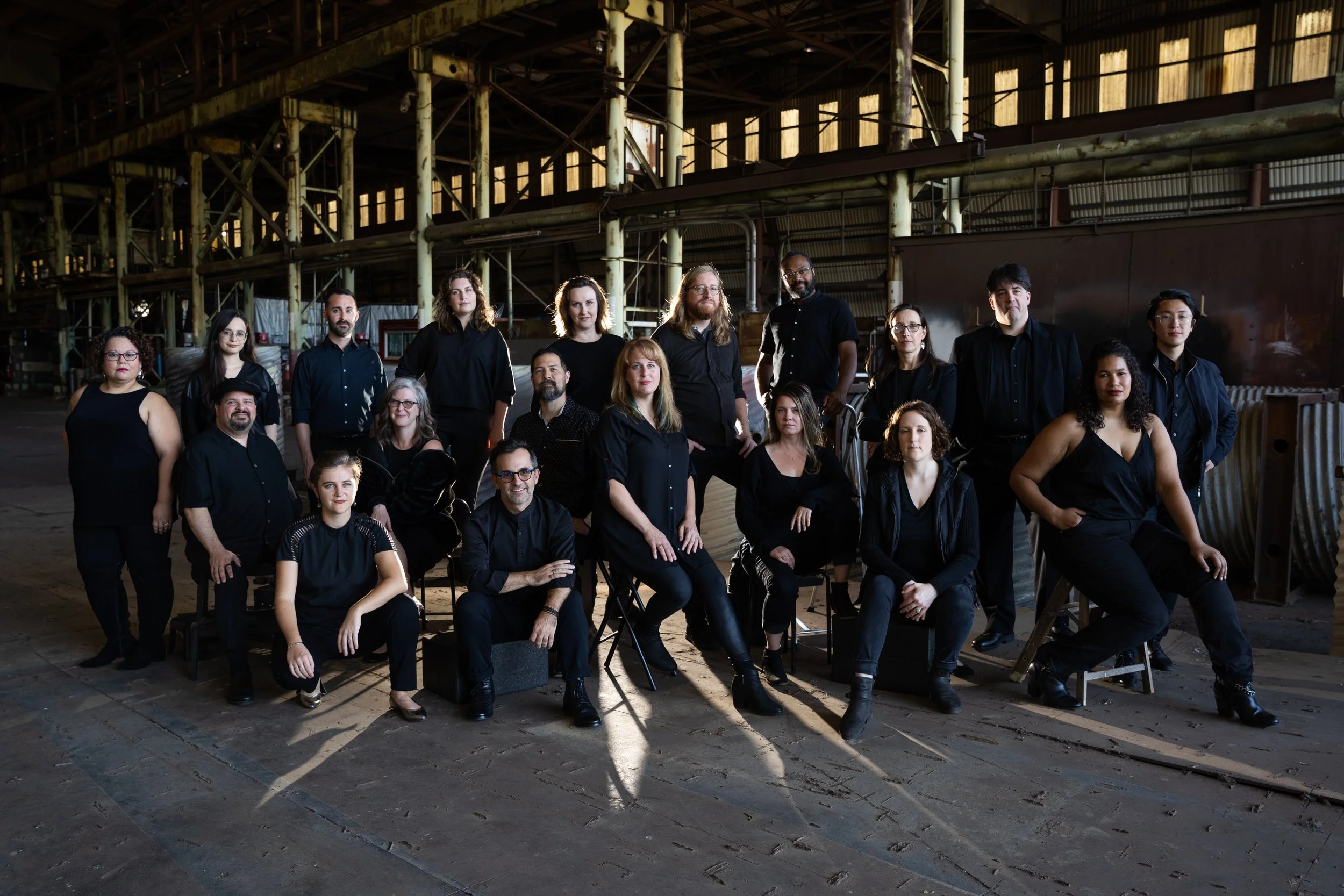
Photo credit: Rachel Hadiashar
Resonance Ensemble
In its seventeenth season, Resonance Ensemble performs powerful concerts sparking meaningful social change through commissioning, collaborating, and connecting.
Under Artistic Director Katherine FitzGibbon, Resonance Ensemble has performed challenging and diverse music, always with an eye toward unusual collaborations with artistic partners from around the country: poets, jazz musicians, singer-songwriters, painters, playwrights, and dancers.
The Resonance Ensemble singers are “one of the Northwest’s finest choirs” (Willamette Week), with gorgeous vocal tone, and they also make music with heart. Resonance has commissioned new works from Jasmine Barnes, Kenji Bunch, Melissa Dunphy, Cecille Elliott, Renée Favand-See, Damien Geter, Darrell Grant, Joe Kye, S. Renee Mitchell, Kimberly Osberg, Dave Ragland, Sweet Honey in the Rock, Ringdown, Judy A. Rose, A. Mimi Sei, Vin Shambry, Mari Esabel Valverde, and Freddy Vilches.
The groundbreaking work that Resonance Ensemble has been producing over the last few years has been noted by local media and national arts organizations. In Oregon ArtsWatch, Matthew Neil Andrews described Resonance as “part social commentary, part group therapy, and part best damn choir show in town.”
More at www.resonancechoral.org.
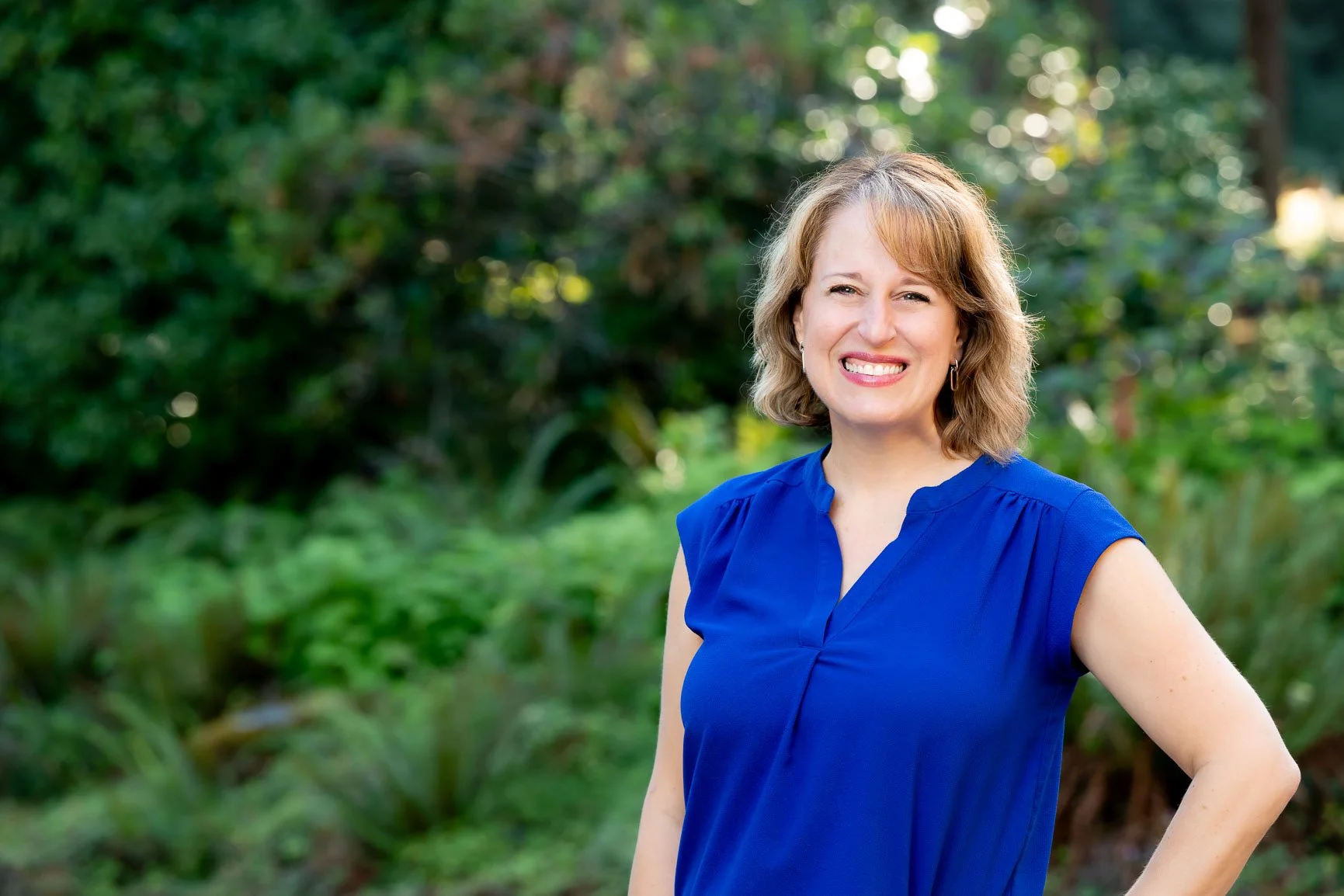
Photo credit: Nina Johnson
Katherine FitzGibbon
(she/her)
Katherine FitzGibbon is the founder and Artistic Director of Resonance Ensemble, a professional choral ensemble dedicated to amplifying marginalized voices and creating programs that spark meaningful social change.
Under her leadership, Resonance has been called “one of Oregon’s most valuable musical resources” (Oregon Arts Watch) and “one of the Northwest’s finest choirs” (Willamette Week). FitzGibbon has collaborated extensively with Portland arts and community organizations, commissioned dozens of new works, and received grants from the National Endowment for the Arts, Oregon Community Foundation, and Oregon Cultural Trust, among others.
She is Professor of Music and Director of Choral Activities at Lewis & Clark College, where she co-chairs the Arts@LC Initiative and the Strategic Imperatives Advisory Council. Recently, she was inaugurated as James W. Rogers Professor of Music, an endowed professorship recognizing distinguished educators and supporting innovative teaching and research.
FitzGibbon has received the Lorry Lokey Faculty Excellence Award, the David Savage Award, and the Louis Botto Award from Chorus America. An active guest conductor and advocate for choral innovation, she recently completed service as President of the National Collegiate Choral Organization.

Photo credit: Lauren LaBarre
Shohei Kobayashi
(they/he)
Conductor and educator Shohei Kobayashi is Assistant Professor of Music and Director of Choral Studies at Reed College. An active guest conductor and clinician, Shohei brings joyful focus and intentional musicality to their work with collegiate choirs, instrumental ensembles and orchestras, and community, church, and high school choirs. Shohei is also a teacher of conducting, active locally and nationally, whose recent engagements include guest teaching graduate and undergraduate conducting students at University of Oklahoma, University of South Carolina, St. Olaf College, and Hope College, serving as Associate Director for the Choral Conducting Institute at Interlochen with Jerry Blackstone, and an invitation to clinic the Undergraduate Conducting Masterclass at the Southwest American Choral Directors Association’s 2024 conference. In addition to working with Resonance and at Reed, Shohei performs with a jazz-rock quintet called Onion and is a freelance vocalist in the Portland area.
Since 2013, Shohei has contributed to Resonance Ensemble in multiple roles, from volunteer to board member to performer, and has served in their current role as Associate Conductor and Artistic Advisor since 2022.
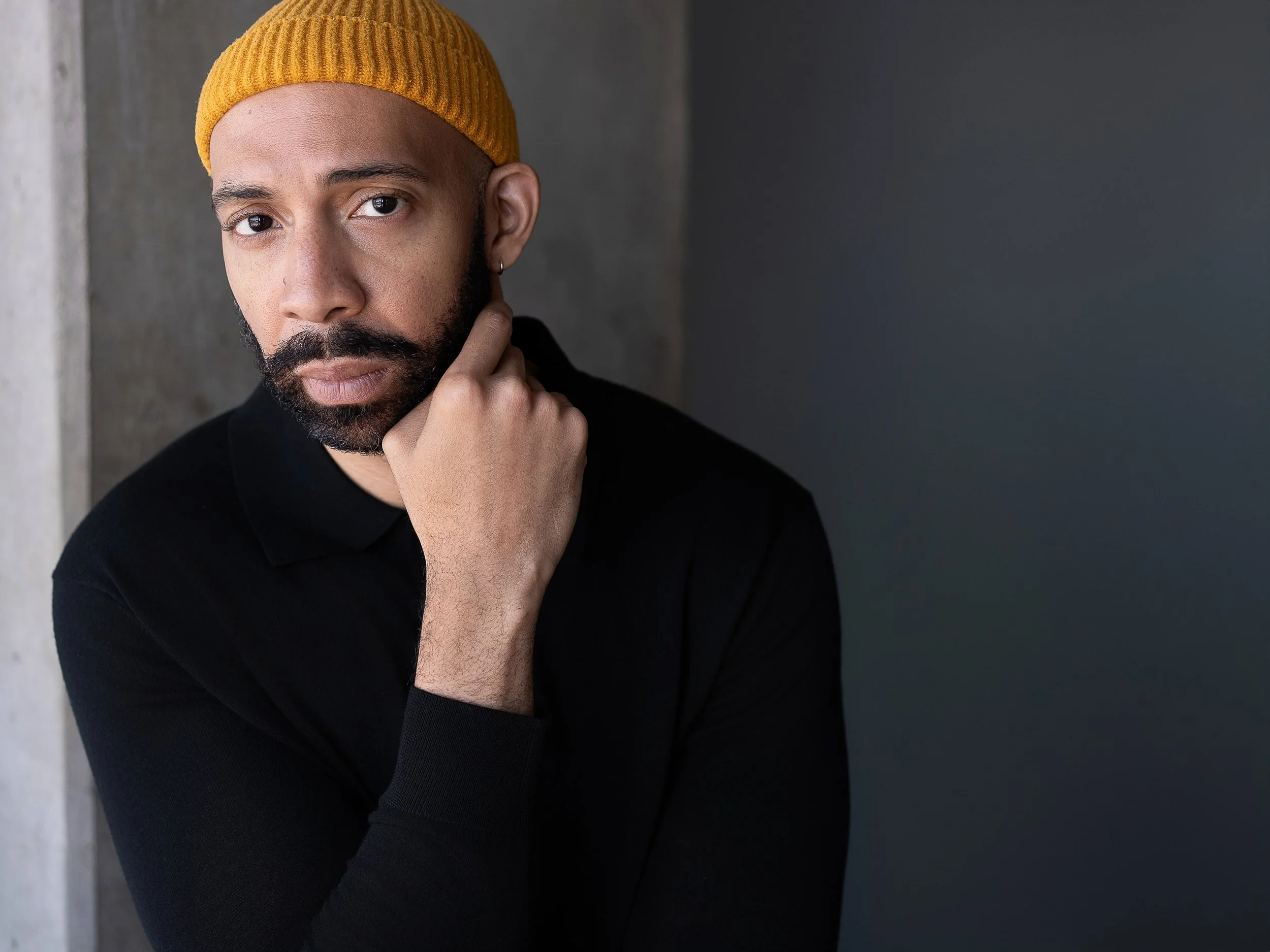
Photo credit: Rachel Hadiashar
Damien Geter
(he/him)
Damien Geter is a composer, conductor, and bass-baritone whose work has been featured extensively by Resonance Ensemble. For Safe Harbor, Geter contributes four commissioned pieces, two of which were later incorporated into his landmark work, An African American Requiem—the first large-scale requiem to memorialize Black Americans lost to racial violence. Originally commissioned by Resonance in 2017, the Requiem integrates texts from victims of racial violence, writings of Black civil rights leaders, traditional spirituals, and the Latin Mass. Its premiere in 2022, delayed by the pandemic, was accompanied by a comprehensive education initiative, amplifying its community impact. Since then, the work has resonated nationwide, including an East Coast premiere at the Kennedy Center, and was named one of 2022’s “Best in Classical” works by The Washington Post.
As Resonance Ensemble’s Artistic Advisor from 2014–2024, Geter has helped shape Resonance’s artistic direction while continuing to compose powerful, socially engaged works. His contributions to Safe Harbor extend Resonance’s mission of commissioning music that elevates diverse voices, inspires reflection, and connects deeply with listeners.