
Safe Harbor : An Interview with Resonance Ensemble’s Artistic Director Katherine FitzGibbon
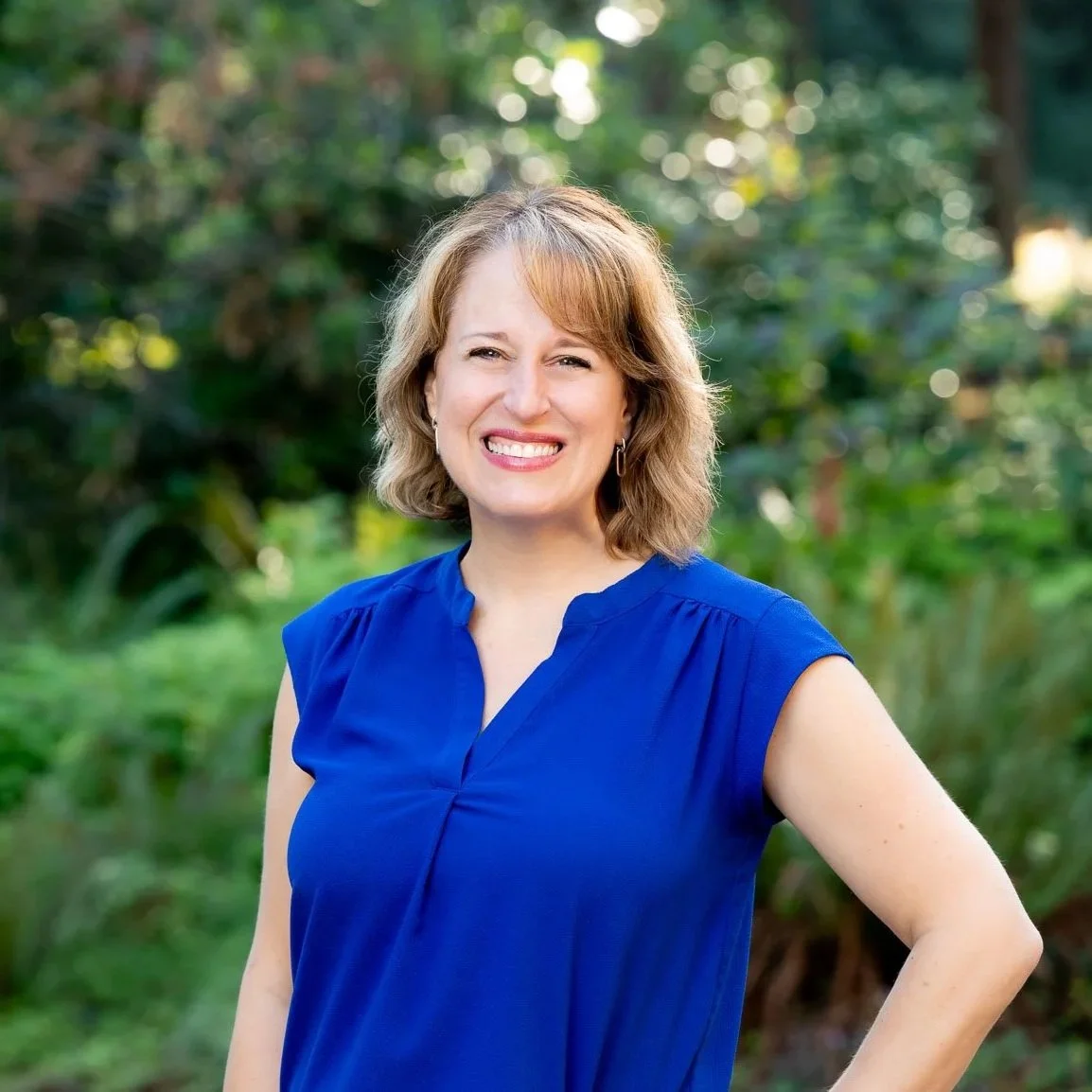
Resonance Ensemble’s Artistic Director Katherine FitzGibbon (Photo: Nina Johnson)
This article originally appeared in Issue 50:1 (Sept/Oct 2026) of Fanfare Magazine.
Feature Article by Colin Clarke
Few new releases impress on multiple levels as much as Resonance Ensemble’s Safe Harbor. As you can read below in my interview with Resonance Ensemble’s Artistic Director Katherine FitzGibbon, this is a sequence of choral pieces that work on various levels, from community through dialog with other art forms, through coming to peace with our past to create a brighter future. On top of that, the performance standard is exceptional, so we delve into some aspects of that, too …
Dr. FitzGibbon, you are founder of Resonance Ensemble, and its Artistic Director. One of the accompanying notes to your release Safe Harbor talks of Resonance Ensemble changing its mission from broad-spectrum repertoire to acting as an agent for social change. Could you elaborate, and just what that shift meant in terms of focus, and how your members work? Please feel free to integrate into your answer the choir’s social work and how you see music as mattering in a fractured world—what do you think music can say that hasn’t already been said in words? That it speaks directly to the heart?
When I first started Resonance in 2009, my goal was to connect choral music with other art forms, putting music in dialogue with visual art, storytelling, dance, and so on. Our mission still prizes collaboration with artists across genres and art forms; our concerts always involve visual imagery, readings, and other immersive artistic ideas.
But in 2016–17, we were bombarded with overtly racially and gender-biased rhetoric in U.S. politics. As an organization, we started thinking about the ways we might use choral music to be an opposing force, a creative force. Many music lovers know firsthand the ways that music’s deep listening helps enable emotional receptivity to another perspective. We decided it was time to rewrite our mission to focus our efforts on creating concerts that spark meaningful social change, and that vocal music was the perfect vehicle for making an impact in our community.
Since then, we have commissioned more than one new work every year, and in some cases, some really significant works like Damien Geter’s African American Requiem, for full choir, orchestra, and soloists. For many of these vocal works, we have also commissioned new texts to share stories that haven’t been centered in classical music before. We hope that part of our legacy will be a significant body of choral music that shares new perspectives in innovative ways.
We’re seeing this helping to create change in our own community already. Some audience members have told us that they wept because they felt “seen” by having their own experiences described poetically and set to music. In other cases, audience members have learned about an experience other than their own—say, addiction, or prejudice, or transphobia—and felt so moved by the music and poetry that they felt called to take action. We typically partner with a local organization that is working to address an issue or support a group of individuals whose stories we are centering, and then that organization attends the concert and helps provide audience members with concrete actions they can take to have an impact. So it’s not just a matter of moving people and then sending them back to their daily lives, but rather giving them something constructive to do with that impulse.
The album is divided into two parts: REflect and REimagine. Let’s take them one by one: the first allows for listeners to explore histories—as you put it, “moments that shape us, stories that deserve to be told, and the challenges we carry forward.”
Yes—we were excited to create this double album of works that we have commissioned since our mission changed. We realized that these commissions have powerful texts that tended to fall into two categories—they either are helping tell stories that are part of our shared history, or they are dreaming of a new future.
And the REimagine part? An imagining of a very different future, where “voices unheard are once more honoured” and, importantly, where “music inspires action and connection”?
Yes, we think of the music here as a catalyst for action. We hope that listeners will be moved by these ways of imagining a more just future and feel inspired to build that in their own communities.
So we can only embrace a positive future by examining and absorbing our past?
That’s right, and in fact, in Darrell Grant’s work From the Book of Sankofa, that idea encapsulates the thesis of the work—the idea of “Sankofa,” a Twi word from the Akan tribe in Ghana meaning “go back and get it.” It has a famous visual symbol of a bird with its head facing backward, which people use to represent the idea of looking back at our past to learn from it and move forward. I love what Darrell wrote in his program note: “It encourages us to remember the struggles and triumphs of our ancestors, and to use that knowledge in our pursuit of a better future.”
The excellence of the performances is evident everywhere, right from the oh-so-tight ensemble of “We Are Murmurs,” the first track—would you like to explain this piece?
I absolutely love We Are Murmurs, and I’m excited to share Cecille Elliott’s work with the world. She’s a brilliant composer, with a background that spans classical violin, jazz voice, and close harmony singing, and many other styles. She writes her own texts, too, and they have such vulnerability and interpersonal truth.
Cecille is talking about an experience of sudden grief. She doesn’t specify what kind of grief, which lets all of us, I think, empathize with aspects of the song. At one point, she shared that it’s about the notion of not being ready for change, but having change come anyway. The text keeps repeating the idea that we “keep on separating from each other.” It has some real pain built in.
I love the way Cecille has this tight, tuneful arrangement with such a catchy pulse. You can’t escape the pulse. I can’t hold still when I listen to it. But I think that’s a way of showing how magnetic the pull to “keep on separating from each other” can be.
Also the first track introduces the recording—on headphones, the sound is spacious, but the actual locations of the voices are exactly locatable. Sopranos seem to be on both right and left, with male voices in the front. What was the strategy behind the mic placement, mixing, and so on?
Yes! You’ll hear that the soprano and alto often carry the melody and the text, while the tenor, baritone, and bass often have more of an accompaniment idea. So you’ll hear the treble voices across from one another (practically speaking, it also meant that they could have eyes on each other the whole time to get that incredibly aligned sound), and the lower voices in the middle. Of course, when they all have the text in the middle, it’s such an arrival moment: “Bury our history, make it a mystery, and we’ll keep separating from each other.” And then the voices do separate again!
It occurs to me, it’s like the reverse of the “Sankofa” idea—like a cautionary tale. If you bury your history, you’ll just keep separating from each other again and again—that’s not the recipe for human connection!
So to “There’s a Man Goin’ Round,” a spiritual arranged by Damien Geter which also is the beginning of the “Liber scriptus” of Geter’s African American Requiem? It’s very powerful, both in terms of embracing feminism and in its reference to violence currently in the U.S. (we have a fair amount in the U.K., too, sadly, but more knives than guns here). Firstly, why do you think spirituals speak so powerfully, both as stand-alone entities, and within concert music (I think of Tippett’s A Child of our Time, for example)?
Damien Geter has been doing extremely high-profile commissions around the United States of late, both in the opera and orchestra worlds, but before that, he lived in Portland and was a member of Resonance Ensemble, served on our board during our mission change, and was our Artistic Advisor. Damien was a huge part of helping us define who we wanted Resonance to be, and then writing new music that let us live those principles. He’s moved to Chicago now, but he will always be part of the Resonance family! I’m so glad that a number of his commissions are featured on this album.
One of the first pieces he wrote for Resonance Ensemble to sing was this a cappella arrangement of the spiritual “There’s a Man Goin’ Round.” Spirituals are a powerful part of the United States’s history; they were written and shared by African Americans during the time of slavery and have been passed down across generations. There are many different types of spirituals; some remind us to hold on to hope for the future—for freedom, for heaven. Some have encoded messages that were telling listeners how to escape to freedom. Over the last 150 years, they have become part of the Civil Rights era, part of protest marches, and now, with various arrangements, part of our concert repertoire. They always provide an opportunity to reflect on parts of our history that we don’t want to repeat.
So, Damien arranged this spiritual first as the stand-alone a cappella arrangement that you hear on this album. Later, it was the introduction to the “Liber scriptus” in his African American Requiem, which is especially appropriate, as that movement in the Requiem talks about being added to the book of names, while the spiritual “There’s a Man Goin’ Round” talks about how Death is “goin’ round, takin’ names.” Damien uses spirituals in the African American Requiem, along with a number of newer texts and musical influences from the African diaspora, layered into the traditional Latin Requiem mass. I feel like a great analog is Britten’s War Requiem. For me, when I hear the way Damien uses spirituals in the African American Requiem, it reminds me that this is our musical heritage and our country’s history, and that it’s speaking to me today through Damien’s voice and through this tradition.
Two tropes seem very powerful here: the sudden unison/octave statement, and the soaring soprano lines that are at once decorative (if you put them under a Schenkerian microscope, for example), but so much more than that in their Affekt. What else do you think gives this music its individuality, both in pure musical signature and in the response to the text?
Damien’s a cappella arrangement really captures, I think, the heart of what makes this spiritual so compelling. The tune has a kind of yearning, arc-ing shape, and Damien plays on the devastating idea that Death is coming for all of us—our brother, our sister, our father, our mother—by writing an arrangement that emphasizes an aspect of this tune each verse. It opens with a single soloist singing the melody in its simplest form (the wonderful Onry [a mononym] on the solo), and then has a second verse where the choir comes in underneath the solo, echoing the soloist, but also adding the creepiest added augmented fourth to introduce a kind of horror about this. The next verse plays on how Death is “coming ’round” with a literal round, a canonic expression of the text. And the last verse is the one that you mention—a sudden unison/octave statement that seems to emphasize that this is something we are all experiencing together. It re-starts the text and then layers the incredible soaring solo voices above the choir, like a keening, mournful statement.
There is more Geter in The Talk: Instructions for Black Children when they Interact with the Police. Again, there is a sudden break—here, of the loss of babies through ill-health, premature birth, or lost/unseen stories seems to raise their head above the parapet again, as if their time is ripe. This is a core tenet of the album, right? Making the invisible—or deliberately ignored—visible?
Yes! We had a concert about some of the unseen aspects of parenthood, including infant loss, or the birth of children with heart conditions. And I asked Damien if he knew of any repertoire that spoke to this aspect of parenthood for Black parents—giving their children “The Talk” about what to do if they are pulled over by the police. He and I both scoured the repertoire and found nothing, and he said, “You know what this means, don’t you? It means I’m going to write it.”
And you’re exactly right—this is exactly what we’re trying to do with this album and with Resonance’s mission. Every Black parent we’ve talked to has had this conversation with their children, and yet, a lot of people outside the Black community, until relatively recently, were often unaware of this—or chose to be unaware.
The text is what to do if pulled over by the police—“keep your hands where they can see them” for example (illustrated by clapping, which is clever!). There is, though, a lightness to the music—how does that fit in with the text?
I see the clapping as having a sharp, almost performative quality to it—like, look, here are my hands, I am doing what you asked of me. I’m furious, and terrified, but I’m doing something that looks more benign on the outside.
How do you see the inserted line “Be polite, Save your rage”—an interpolation credited to Jasmine Love?
I love this line. It’s not saying, “Don’t feel your rage.” It’s OK to be angry. But save the outward expression of your anger until you’re in a safe place for that. In the moment, when your life can depend on it, your outward expression must stay neutral and calm.
The repetitions in this piece aren’t quite a mantra, but there is certainly a slightly hypnotic aspect to them. They head toward a major-mode conclusion after a minor-mode opening to the piece—but would you say that arrival to a haven is only temporary? If so, do you find that reflected in the music?
The final part of the piece gives us a view of what the parent is feeling underneath these instructions. The soloist sings about how she knew from the time she held her baby that they were going to need to have this talk, and she just has to repeat this entreaty to “get home safe.” That’s the fundamental need: to protect your child. It’s the heartbeat of this piece. And it’s not something you can guarantee.
Darrell Grant’s From the Book of Sankofa takes in ancestral wisdom via memory as a key to giving hope to the future—the key to understanding the now is via the past. The subtitle is “Words she would have us know”: Mission, Essence, Reflection, Progress, Reimagine, Channel, Dignity, Migrate, Reincarnate, Piety, Reverence, Stir. A solo cello represents the flight of the sacred Sankofa bird … Stylistically, this piece has a wide range of reference, from jazz to Ravel, from Herbie Hancock to Schubert. What are the interpretative challenges of this stylistic reach? Over and above this, the piece exists as a narrative arc, so do you see the references under one overall harmonic umbrella/composer fingerprint?
Composer Darrell Grant wrote this with poet A. Mimi Sei, and they initially sat down to brainstorm about key ideas they wanted to serve as pillars in creating the piece, as a kind of thought exercise to inform their process. But then they loved these 12 words, and Darrell ended up keeping them as touchpoints in the finished composition. The piece takes the listener through those ideas, which also shape the musical language Darrell writes in each section. They’re also the reason for the subtitle, “Words she would have us know.”
Darrell is another musician who lives in many musical styles. He’s a renowned jazz pianist, and you hear his jazz-informed harmonic language throughout. We felt like we were rehearsing a great jazz horn section at certain points! And it meant that we made interpretive decisions that were informed by all of the stylistic references that you mentioned. Darrell was clear that this isn’t solely a jazz piece, but rather something that synthesizes a wide array of personal musical influences.
Again, the recording of the spoken words is very close (especially the single word “Return,” or so it seems when one hears it); Diction, too, is superb—I didn’t need the printed texts. How high a priority is this word-intelligibility for you?
Thanks for saying that! We absolutely prioritize diction and attention to the meaning of the text—in other words, not just enunciation, but which words really matter, and how we can shape the phrases to ensure that the text is paramount. Shohei Kobayashi conducted this work in its premiere and on the recording, and Shohei took incredible care with the text and the phrasing to be sure this all comes across.
Damien Geter’s After Time has Gnawed is to a text by James DePreist, perhaps better known as a conductor—I didn’t know he was a poet!
Yes! James DePreist was a Portland icon, too, as the decades-long conductor of the Oregon Symphony. I came across a book of his poetry in a bookstore here, and I mentioned this poem to Damien. We worked with DePreist’s widow Ginette to have the rights to set this poem to music, and she ended up coming to watch us record it!
Artists flourish in times of adversity, and the pandemic was no exception. There is a beautiful backstory to After Time has Gnawed Away the Shield of Dreams—would you like to relate it?
During the pandemic, we were looking for ways we could still make music together, and we realized that we could record new works outdoors. We filmed a video series in 2020–21 called Under the Overpass that had our Resonance singers coming together to perform safely, masked and six feet apart, under some of Portland’s iconic bridges. This work was the final installment of the series. It was so affirming to be able to create new art together, even during this challenging time.
Damien and I really loved how James DePreist’s text refers to a time when time has “gnawed away the shield of dreams / and placed at risk dreaming,” when hope seems lost—and yet reminds us that such a time can be the prelude to a phoenix song, an opportunity for rebirth. We had hope that the pandemic would yield to a time of change and transformation for our society.
Also, could you relate how it is dedicated to the 1921 Tulsa Massacre, which I believe extended over two days?
We were releasing this world premiere commission video in June 1921, one hundred years after the Tulsa Race Massacre, when white supremacists attacked Black families and businesses in what was known as “Black Wall Street,” murdering dozens of individuals at the least (the full toll isn’t known) and putting thousands into the hospital. More than 35 square blocks were burned and destroyed.
Here we were in the midst of a 21st-century racial reckoning after the murders of George Floyd and Breonna Taylor in our country, and countless other stories still happening every day. This was a way of honoring the victims of the massacre before but also pointing to the need to grapple with the history—and the present day—of racial violence in our country.
The combination of choir, flute, and piano and the poem is wonderful—and very carefully positioned on the page (particularly at “dreaming” and “a phoenix song”). How do you feel the music reflects the poem’s structure?
Oh, completely—the thorny chromatic writing at the beginning, when the dream has been “placed at risk,” is replaced ultimately with the completely diatonic and hopeful “phoenix song.” It’s such a great tune, too—even just thinking about the text gets that amazing line stuck in my head! And I agree with you about that moment at the word “dreaming”—such gorgeous text- painting.
The sixth track is the titular track: Safe Harbor by Joe Kye, a name new to me, I must admit. The idea is that of safety in asylum? This is a very personal work for Kye, who integrates both Korean and American elements into his music … it begins with a (remembered) Korean Lullaby. The work is subdivided into clear sections, the second a reflection of what it means to leave a homeland, the third a message of hope told in word singularities against a slow pizzicato moto perpetuo. Fabulously inventive and effective: the title is at the core of your disc’s ethos, but the music is as well? The techniques employed, the way the composer reflects the text in the music?
Again, if this album helps spread the word about some of these incredible composers, that’s part of our goal! Joe Kye is a beloved Portland-based composer. I love that you characterize his writing as “fabulously inventive,” which is exactly right—he combines solo violin with electronic looping, uses solo voice and choral textures, and combines influences from both countries and multiple styles. The title and the ideas are absolutely at the heart of this album’s ethos, and yes, I think that a number of our commissioned composers find really personal ways to set the text using a type of creative and personal merging of multiple genres and influences.
Jasmine Barnes (text Sonya Renee Taylor) offers Normal Never Was: you took this as the theme for your 2020/1 season? The “pre-corona existence” idea, and the idea that a reset of sorts is available, is set in a very light way: deliberately masking the larger issues? Or is the joy from the sense of liberation from norms? The final line, incidentally, is very powerful (“We are being given the opportunity to stitch a new garment, / one that fits all of humanity and nature”).
We have performed this piece a number of times now, and it’s amazing how the audience often chuckles along with it. Jasmine wanted to use both vocal jazz techniques and West African drumming influences to have a light, rhythmically driven approach for the part of the song that’s portraying the “pre-corona existence.” I think of it as a superficial/glossy sheen on our previous “normal,” where we normalized greed, inequality, and environmental harm for the sake of our own convenience, ignoring the ways that it was problematic and actually harming our society. So, we’re just bopping around in this jazzy way as if nothing is wrong. But then the text, by writer/activist Sonya Renee Taylor, reminds us of the cost of the old “normal,” and we resolve that “we should not long to return.” And then that phenomenal solo trio with Cecille Elliott (the composer of “We Are Murmurs”), Shohei Kobayashi, and Cecily Kiester affirms that “we are being given the opportunity to stitch a new garment,” and there’s almost a mystical quality to the way Jasmine sets “one that fits all of humanity and nature.” And she leaves us with just a hint of the initial jazz bop, as if to say, the choice is ours!
Mari Esabel Valverde’s (composer) and Lady Dane Figueroa Edidi’s “We Hold Your Names” honors transwomen of color whose lives have been unjustly taken. The singing of names is incredibly powerful, especially as there is a sense of the additive, both as name follows name, but also in terms of crescendo.
We were part of a consortium of choirs that commissioned Mari Esabel Valverde to write this piece, and I spoke a lot with Mari and with Lady Dane Figueroa Edidi about their creative collaboration. Lady Dane wrote the poetic part of the text, and Mari researched the names and stories of trans women of color who had been murdered in the previous year. When we premiered this work in video form during the pandemic, we also researched each of the names we were lifting up in song, so that we got to know their stories through their loved ones and chosen family. You can watch the video online to learn more about each of the people the song memorializes.
Kimberly R. Osberg’s (text Dr S. Renee Mitchell) Seek What You Want To Find contains an extraordinary bridge: between Nazi Germany and the shooting of George Floyd via the paintings of Henk Pander (who has firsthand experience of both). Musical references to “Wade in the Water” take on huge resonance. Can you explain how the music handles this, and the challenges for performance? The sense of dialogue between vocal groups? What do you feel the use of strings brings to this piece? And what about the ambiguity of the close? Over a “long sustain,” different strands come through …
This is the first of three works on the album that were part of a concert we called “Portland Protests,” which looked back at the racial justice protests in Portland in 2020, just three years later. We felt aware that we were helping document and reflect on an important moment in history, when it was still in our very recent memory. And then to have the exhibition of Henk Pander’s paintings was extraordinary timing, connecting Henk’s own experiences in Nazi Germany and his witnessing the militarized response to the protests in Portland. We all knew people who had been injured by our own National Guard, or taken away in unmarked vans.
So, Resonance commissioned three composers and three poets to write new works, and conductor Shohei Kobayashi took the composers and poets to the Pander exhibition to start thinking about these themes and histories. Then, the poets each wrote a poem speaking to an aspect of the protests or their experiences of them, and the composers chose one of the three poems to set. (Fascinatingly, each composer was drawn most to a different poem, so it felt like it was meant to be!)
Dr. S. Renee Mitchell’s poem engages closely with the Pander paintings and connects them to Oregon’s history of segregation and the long-term struggles of the Black community through the reference to the spiritual “Wade in the Water.” And I love Kimberly Osberg’s composition, with its soaring lines that feel like they take the vibrant brush strokes of Pander’s oil paintings and turn them into sheer melody.
It’s a big ask to set the Agnus Dei given its place in the Christian liturgy—Geter again—and again from the African American Requiem (which holds 19 movements in total). Does the movement suffer from extrapolation, do you think? Or even gain in strength?
In the context of the African American Requiem, this moment is incredibly moving. After the significant choir and orchestra texture throughout the work, suddenly the orchestra and soloists drop out to feature the choir, a cappella. So, by contrast, it feels especially personal and deeply human. On the album, it’s almost the opposite—the piece gives the choir the opportunity to sing fully with an operatic sound. Either way, it really gets your attention! And I love the way that Damien’s soaring legato melody lines contrast with agitated layered textures in the second section, so it really showcases Damien’s sense of drama. It highlights the text as a heartfelt plea for mercy.
Judy Rose’s “Re-flec” (text Vin Shambry) is a meditation on many things, including the power of naming—and of the names themselves (those taken before their time are named in the text). Again, very spatial recording! A real sense of narration here, and atmospherics … could you perhaps explain the title and go from there to a broader appreciation of the piece than I can muster?!
This is another piece where the text could be the thesis of the album. Vin’s poetry uses the idea of reflection as a mantra, urging the listener to listen closely to this person’s experience: “Re-flec. Re-flec.” Vin is asking us to think about the way Black people have been dehumanized in this country. And Judy creates this incredible musical language that blends hip-hop and her deep knowledge of choral music, adding spoken word with the soloist Onry.
Finally, Kenji Bunch’s Shout Out! (text A. Mimi Sei), which includes percussion instruments played by members of the chorus to simulate a march. The poem speaks of collectiveness: but starts with a single voice that is added to, gradually, and while the music plays with texture, throughout it is luminous, the end eminently satisfying (on the word “harmony”). This offers hope—so how do you see this hope manifesting?
I love Kenji’s slow build from the individual to the collective, which very much mirrored what was happening in Portland in 2020. There we were, fully isolated from one another, and yet finding these ways to come together to stand up for what we believe in. And yes, I love the way Kenji ends the work! After the joyful rhythmic section that we all sing in harmony together, when he actually sets the final word “harmony,” he does so in an utterly tender unison. We are in harmony; we are one. There is strength because we are listening deeply to each other, coming together, and creating overtones that are only possible because of this perfect alignment.
I imagine this last was very satisfying to sing?
Absolutely. It feels like we go from a sort of ecstatic groove together to something that feels almost sacred. I hope that listeners can feel how much we listen to one another there, and how much we felt that we shared a connection. It felt quietly strong and hopeful.